Adding a scanner to your Windows 11 system is a simple task that allows you to digitize documents and photos quickly. Just ensure your scanner is connected, open the Settings app, and navigate to the “Devices” section. From there, click on “Printers & scanners,” then click “Add a printer or scanner” and follow the prompts. Voila! Your scanner should be ready to use.
How to Add a Scanner to Windows 11
Getting your scanner set up on Windows 11 is quite straightforward. Follow these steps to make sure your device is ready to scan with ease.
Step 1: Connect Your Scanner
Before starting, make sure your scanner is properly connected to your computer, either via USB or over your network.
If you’re using a USB connection, check that the cable is firmly plugged into both your computer and the scanner. For network connections, ensure your scanner is connected to the same network as your PC.
Step 2: Open the Settings App
Go to your Start menu and type “Settings,” then click the app when it appears.
The Settings app is your go-to place for managing devices on Windows 11. It’s like the control center for your computer’s hardware and software configurations.
Step 3: Navigate to Devices
Once in Settings, find and click on “Devices.”
In the Devices section, you’ll find all sorts of settings related to printers, scanners, and other peripherals. This is where you can manage anything that’s plugged into or connected to your computer.
Step 4: Click on Printers & Scanners
Within the Devices menu, you’ll see “Printers & scanners” on the left sidebar. Click it.
Here, you can view all the printers and scanners currently set up on your computer. It’s also where you can add new ones, like your scanner.
Step 5: Add a Printer or Scanner
Click on “Add a printer or scanner.” Your PC will search for available devices.
After a few moments, your scanner should appear in the list. If it does, click on it, and the installation process will start. If it doesn’t appear, ensure the scanner is on and properly connected.
Once you’ve completed these steps, your scanner is ready to work. You can now easily access it whenever you need to scan a document or photo.
Tips for Adding a Scanner to Windows 11
- Make sure your scanner is powered on before trying to add it.
- Check that the scanner’s drivers are up to date. You can find these on the manufacturer’s website.
- If your scanner uses Wi-Fi, ensure it’s connected to the same network as your computer.
- For older scanners, you might need to download software to enable all features.
- Restart your computer if Windows doesn’t recognize your scanner right away.
How do I troubleshoot if my scanner isn’t detected?
Ensure it’s powered on and connected properly. Restarting your computer or checking for driver updates might also help.
Can I add a scanner without admin rights?
No, you typically need administrative privileges to add a scanner on Windows 11.
What do I do if there are no drivers for Windows 11?
Check the scanner manufacturer’s website for updates or use compatibility mode to install older drivers.
Is it possible to add a scanner via Bluetooth?
Yes, if the scanner supports Bluetooth connection, you can add it through the same “Printers & scanners” menu.
How can I remove a scanner?
Go to the Printers & scanners section in Settings, select the scanner, and click “Remove.”
Summary
- Connect your scanner to the computer or network.
- Open the Settings app.
- Go to Devices.
- Click on Printers & scanners.
- Select Add a printer or scanner.
Conclusion
Adding a scanner to Windows 11 opens the door to a world of digital convenience. Whether you’re scanning important documents for work or digitizing old photos for your family’s archives, having your scanner properly set up is essential. Remember, technology should make life easier, and getting your scanner ready is just a few clicks away.
If something doesn’t go as planned, don’t be discouraged! Take a moment to double-check connections, networks, and drivers. Often, a simple restart can resolve any hiccups you encounter.
Now that you know how to add a scanner to Windows 11, you’re all set to make the most out of your device. Should you wish to explore more tips or troubleshoot further issues, a wealth of resources is just a search away. Keep scanning, keep exploring, and enjoy the seamless integration that Windows 11 offers.

Matthew Burleigh has been writing tech tutorials since 2008. His writing has appeared on dozens of different websites and been read over 50 million times.
After receiving his Bachelor’s and Master’s degrees in Computer Science he spent several years working in IT management for small businesses. However, he now works full time writing content online and creating websites.
His main writing topics include iPhones, Microsoft Office, Google Apps, Android, and Photoshop, but he has also written about many other tech topics as well.
Read his full bio here.
Featured guides and deals
Printers can be difficult ot work with, and troubleshooting them can take you to a lot of different places on your computer.
One common issue that can arise with a printer is when it says that it is offline, even though it’s turned on and seems to be hooked up correctly.
Our tutorial below will show you some steps to try so that you can learn how to change a printer from offline to online.
How to Switch a Printer from Offline to Online in Windows 7
- Click Start , then Devices and Printers .
- Right-click the printer, then click See what’s printing .
- Select the Printer tab, then click Use printer offline to clear the check mark.
Our guide continues below with additional information on how to switch a printer from offline to online , including pictures for these steps.
If you’re lucky, then this should work and your queued documents will start printing. However, sometimes this isn’t enough and you need to do some more troubleshooting. We discuss those additional troubleshooting steps further in this article.
Printers can be frustrating when they are not working correctly, due largely to the fact that errors can occur for seemingly no reason. Whether your print jobs don’t look right, you are getting constant paper jams, or printing is inconsistent or erratic, printers are often some of the most difficult electronic devices to work with. So if your printer is showing as offline and you can’t print, then you may be trying to figure out why it’s showing as offline when the printer was working before and nothing has changed.
One issue that you might encounter is Windows 7 not being able to connect to your printer to send documents that you want to print. Further investigation into the issue might lead you to discover that Windows 7 thinks the printer is offline.
There are several reasons why this might be occurring, so you will need to follow the instructions in this tutorial to learn how to change your printer from offline to online .
Once your printer is back online, it should then start printing the documents that you have sent to the printer that are currently sitting in your print queue.
How Do You Change a Printer from Offline to Online? (Guide with Pictures)
Windows is recognizing your printer as being offline because it is unable to communicate with the printer. This can be caused by several different situations, so you need to pinpoint exactly from where the problem is originating.
These steps will show you how to change a printer from offline to online from a Windows laptop or desktop computer.
Step 1: Click theStartbutton at the bottom-left corner of your screen, then clickDevices and Printers.
Click Start then choose Devices & Printers .
Step 2: Right-click the printer that is showing as offline, then clickSee what’s printing.
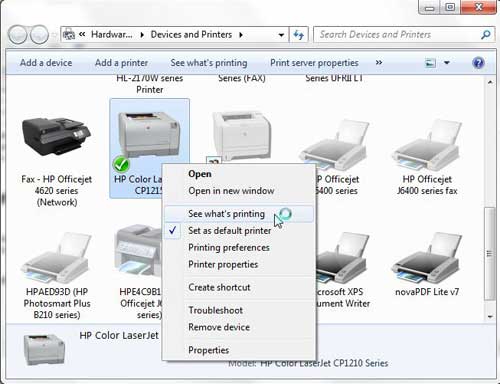
Right-click on the printer, then select See what’s printing.
Step 3: Click thePrinterlink at the top of this window, then click theUse Printer Offlineoption to remove the check mark.
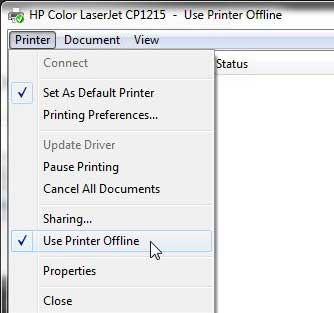
Select Printer , then Use Printer Offline .
Now that you know how to change printer from offline to online you can try this step whenever your computer is unable to print a file.
If this solved your problem, then you are all set and can continue with your printing . However, if this did not resolve the issue, then there are some more troubleshooting steps you can try.
Additional Troubleshooting for an Offline Printer in Windows 7
Check that the printer is turned on, and that the USB cable is properly connected to both the back of the printer and your computer. If your printer is wireless, you may need to restart the printer, then restart your computer to see if you can re-establish the wireless connection.
If you are using a wireless printer, have you recently changed your router, or changed the name of the wireless network ? If so, you may need to update your wireless printer with the new wireless network settings . If your wireless printer does not feature a control panel on the printer that allows you to change the network settings, you may need to temporarily connect the printer to your computer with a USB cable to modify the settings.
If your wired printer is still showing an offline status, despite the fact that it is plugged in and connected to your computer, then there may be a problem with the port to which the device is connected.
How to Change a Printer Port in Windows 7
You can use these steps to change the printer port for a printer that has been set up in Windows 7.
Step 1: Return to theDevices and Printersmenu, right-click your printer, then clickPrinter Properties.
Step 2: Click thePortstab at the top of the window, choose the correct port from the list at the center of the window, clickApply, then clickOK.
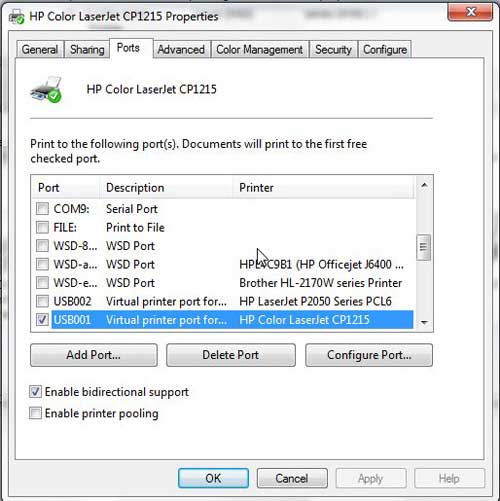
If you are still unable to print, then one final option you can attempt is to stop and restart the print spooler . You can follow the instructions in this article to learn how to manage the print spooler.
If you are still unable to print after following all of these instructions, then you may need to uninstall, then reinstall your printer. You can remove a printer from your computer by right-clicking the printer, then clicking Remove device . Once the printer has been uninstalled, follow your printer’s installation guide to properly reinstall it.
Why Is My Printer Offline?
The sections in the article above provide a bunch of different options and settings that you can check in order to see why your printer might be offline.
There are so many potential reasons that your printer might be offline that it’s hard to point to one specific reason why it might be happening.
In my experience, the best, simplest, and most useful thing that you can do when your printer is showing as offline is to simply restart the printer.
This can resolve issues related to a wireless printer that isn’t connected to a network, it can force the print spooler to restart, and it can fix print jobs that are stuck in the print queue.
While your printer is going through the process of restarting it can be helpful to restart your computer, too. And if you have a wireless printer and have been experiencing connection issues with other wireless devices as well, then even restarting your modem and your router might not be a bad idea.
How do I restart a printer?
You can reboot your printer by pressing the Power button on the printer, waiting until it has completely turned off, then pressing the Power button again to turn it back on.
How can I check my printer status?
If you aren’t sure whether or not your printer is in Printer Online or Printer Offline mode in Windows 11, then a quick way to check is to go to Start > Settings > Devices > Printers & Scanners .
You can then click on your printer and choose the Open Queue option. When you open print queue windows on your computer you can see any documents that are currently queued up to print.
When the printer window is open you can click the Printer option in the menu bar, then make sure the Use Printer Offline option isn’t selected.
How can I change the printer driver that my printer is currently using?
If you go to Start > Settings > Devices > Printers & Scanners then select your printer, you can click the Printer properties button, which will open a new window.
In this window you can choose the Advanced tab, then click the Driver drop down menu and choose a different driver. You could also click the New Driver button, which will launch the Add Printer Driver Wizard .
How do I run printer troubleshooter in Windows 11?
If you aren’t sure what the problem is, you can try the Windows utility that will cycle through a bunch of potential settings to try and fix the problem.
This means it will do things like restart printer related services, such as restarting the print spooler service and checking for outdated printer drivers.
You can do this by clicking the Windows button in the taskbar, searching for “Printer” then selecting the Printers & scanners option.
You can then select your printer and click the Run the troubleshooter option.
Why is my HP Printer offline?
The Hp printer offline Windows 11 steps are the same for Hewlett Packard printers as they are for other printers.
You need to open the Windows Settings menu, choose Bluetooth and devices, then select Printers & scanners.
You can then click on the default printer or whatever printer you want to check, then make sure Use printer offline is not selected.
If it is offline and clicking that option doesn’t put it back online, then you will need to go through the troubleshoot printer offline process of checking the printer cable (or the network status for wireless printers) and restarting the printer and the computer.
If that doesn’t work, then you may printer offline – how to put online instructions on the printer manufacturer’s website, which may involve reinstalling printer software and drivers.
Matthew Burleigh has been writing tech tutorials since 2008. His writing has appeared on dozens of different websites and been read over 50 million times.
After receiving his Bachelor’s and Master’s degrees in Computer Science he spent several years working in IT management for small businesses. However, he now works full time writing content online and creating websites.
His main writing topics include iPhones, Microsoft Office, Google Apps, Android, and Photoshop, but he has also written about many other tech topics as well.
Read his full bio here.
Featured guides and deals
Adding a printer by its IP address in Windows 11 is a straightforward process once you know the steps. First, you’ll need to access the Windows Settings and navigate to the Devices section. From there, select the option to add a printer, but instead of searching for available printers, you’ll choose to add one using its IP address. This method ensures a direct connection, minimizing any potential hiccups in locating your printer on your network. In just a few simple steps, you’ll have your printer ready to use!
Adding a Printer by IP Address in Windows 11
This step-by-step guide will walk you through the process of adding a network printer using its IP address on a Windows 11 device. By following these steps, you’ll be able to quickly and efficiently connect to the printer and start printing your documents.
Step 1: Open Windows Settings
Press the Windows key on your keyboard and select “Settings” from the Start menu.
The Windows Settings menu is where you can adjust a variety of system preferences. Accessing it is the first step in customizing your device to meet your needs, including adding new hardware like a printer.
Step 2: Navigate to Devices
In the Settings window, click on “Devices” to access the devices menu.
The Devices section allows you to manage all peripherals connected to your computer, including printers, scanners, and even Bluetooth devices. It provides a comprehensive overview of your device ecosystem.
Step 3: Click on “Printers & Scanners”
Select “Printers & Scanners” from the left sidebar in the Devices menu.
This section is specifically dedicated to managing printers and scanners. Here, you can see a list of existing devices and have options to add new ones or troubleshoot issues.
Step 4: Add a Printer
Click the “Add a printer or scanner” button at the top of the window.
This button initiates the process of searching for nearby printers. However, since we’re adding the printer via its IP address, you’ll need to proceed to the next step.
Step 5: Select “The printer that I want isn’t listed”
When the scan completes, choose “The printer that I want isn’t listed.”
By selecting this option, you can manually set up a printer that might not be automatically detected, which is often the case for network printers accessed through an IP address.
Step 6: Add Printer by IP
Choose “Add a printer using a TCP/IP address or hostname” in the wizard, then click “Next.”
This option is designed for adding network printers that are recognized via an IP address. You’ll need the printer’s IP address handy for the next part of the setup.
Step 7: Enter IP Address
Enter the printer’s IP address in the “Hostname or IP address” field and click “Next.”
The IP address is the unique identifier for your printer on the network. Make sure to enter it correctly to avoid any connection issues.
Step 8: Install Printer Driver
If prompted, install the necessary drivers for the printer and complete the setup.
Drivers are essential for your computer to communicate correctly with your printer. Windows 11 may automatically find and install these, or you might need to provide them manually.
Once you’ve completed these steps, Windows 11 will finish setting up the printer. You should now be able to send print jobs directly to it. If everything is configured correctly, the printer will appear in your Printers & Scanners list, ready to use.
Tips for Adding a Printer by IP Address in Windows 11
- Double-check the IP address you entered; a single digit mistake can prevent connection.
- Ensure your printer is powered on and connected to the same network as your computer.
- Regularly update your printer drivers to avoid compatibility issues.
- If unsure of the IP address, print a network configuration page from the printer.
- Consider assigning a static IP to your printer to avoid reassignment by your router.
What if I don’t know my printer’s IP address?
You can usually find the IP address in the printer’s network settings menu or by printing a network configuration page from the printer itself.
Can I add a wireless printer by IP address?
Yes, as long as the wireless printer is on the same network, you can add it using its IP address following the same steps.
Do I need administrative rights to add a printer?
Typically, you need administrative rights on your computer to install new hardware like a printer.
Why isn’t my printer showing up after entering the IP address?
Ensure that the printer is connected to the network and that the IP address entered is correct. Restarting your devices can also help resolve connectivity issues.
How do I print a test page to ensure the printer is working?
After the printer is added, go to “Printers & Scanners” in Settings, select your printer, and choose “Manage.” You’ll find an option to print a test page.
Summary
- Open Settings.
- Navigate to Devices.
- Click on “Printers & Scanners.”
- Add a printer or scanner.
- Select “The printer that I want isn’t listed.”
- Add a printer using a TCP/IP address.
- Enter IP address.
- Install printer driver.
Conclusion
Adding a printer by IP address in Windows 11 can seem a bit like navigating a maze, but with the right map—this guide—you’ll find it’s pretty straightforward. This method is especially handy when dealing with network printers, as it circumvents the sometimes finicky automatic detection processes. Once added, your printer becomes a reliable member of your device team, ready to churn out documents whenever you need them.
For those looking to expand their knowledge further, consider diving into additional printer networking topics. Learning about static IP addresses or network security can bolster your tech savvy, ensuring smooth sailing with all your home or office tech endeavors. Keep exploring, keep learning, and soon enough, you’ll be the go-to person for tech solutions in your circle!
Matthew Burleigh has been writing tech tutorials since 2008. His writing has appeared on dozens of different websites and been read over 50 million times.
After receiving his Bachelor’s and Master’s degrees in Computer Science he spent several years working in IT management for small businesses. However, he now works full time writing content online and creating websites.
His main writing topics include iPhones, Microsoft Office, Google Apps, Android, and Photoshop, but he has also written about many other tech topics as well.
Read his full bio here.
Featured guides and deals
If you’re used to working with printers frequently, you have probably faced situations where your machine is ready to print, but the printer status on your Windows 10 is showing offline.
This can happen due to minor network connectivity issues, poor printer connection, paper jams, or other problems.
Whatever the reason is, you should know how to get a printer online in Windows 10 to fix the problems and get your work done.
To make the task easier for you, we will discuss a number of methods of solving the printer offline issue and tell you some simple tricks to avoid such problems in the future.
We will cover it all, from minor paper jam problems to complex setting issues. So, let’s dive right in.
How to Use the Windows 10 Printer Troubleshooter to Get the Printer Online
- Press the Windows key + I to open Settings.
- Choose Devices in the left column.
- Select Printers and Scanners .
- Choose to run the troubleshooter.
- Let the troubleshooter run and perform the suggested tasks.
Our guide continues below with additional information on getting your Windows 10 printer online, including some other options that you can try which might help to resolve the situation.
Sometimes you will need to send someone a picture of the items that appear on your screen. Our article on how to screenshot on Acer laptops can help you with that.
How to Solve Windows 10 Printer Offline Issues – 10 Options
As you already know, your computer can show that your printer is offline for many reasons. Some problems are so trivial that you can solve them within moments, even without any printer technician. Below are some effective and detailed methods to solve the printer offline error yourself:
Method One – Perform Physical Checks
To bring back a printer online, you should properly check all the wire connections. If your machine is a local printer or a network printer and needs to be connected by a USB cable or Ethernet cable, you should check out whether the connection is firm or not. Try checking out the cable at both ends of your USB port and printer.
If the cable is too loose or broken, replace it with a new one. Also, try to use multiple USB ports on your computer to make sure that the problem isn’t in your cable, ethernet port, or USB ports.
Method Two – Check Your Internet Connection
If you have connected your printer using a Wi-Fi network, check out if the device’s network is working properly. The printer’s status might go offline if the network is too slow or if the network keeps dropping.
So, check out the condition of the network from the built-in options of your printer. If you don’t know how to connect your printer through Wi-Fi, look for instructions in your owner’s manual. Sometimes the printer status goes offline when you try to connect it using a VPN (virtual private network.)
In that case, you must disconnect the VPN connection and restart your printer. Otherwise, you can also try a more efficient VPN connection and adjust the VPN configuration to access the local network.
Method Three – Restart Your Printer and Computer
The process of restarting your devices is called power cycling. It’s a very common technique to solve minor glitches in your devices – power off both your PC and printer first. Then disconnect your printer from the computer and unplug its power cable.
Wait for 30 seconds before restarting the printer. When your printer is switched on, turn on your computer again and check if the offline status is turned online.
Method Four – Use Printer Offline Option
If our previously mentioned methods fail to solve your printer problems, it’s time to do some work manually. You need to open settings on your computer and make some necessary changes to the printer offline option. And here’s how to use the printer offline option in Windows 11 –
Step 1) On your windows computer, click on the ‘Start’ option from the bottom of your screen. From there, click on the ‘Settings’ option and then ‘Bluetooth and devices.’
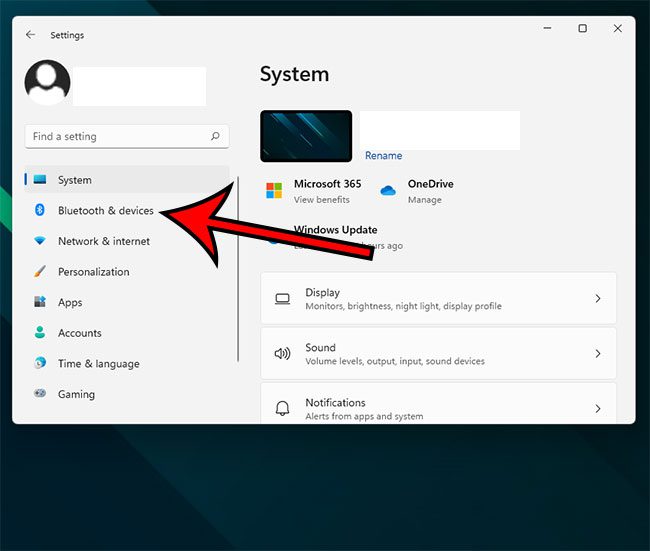
Step 2) Now select the option called ‘Printers & Scanners’.
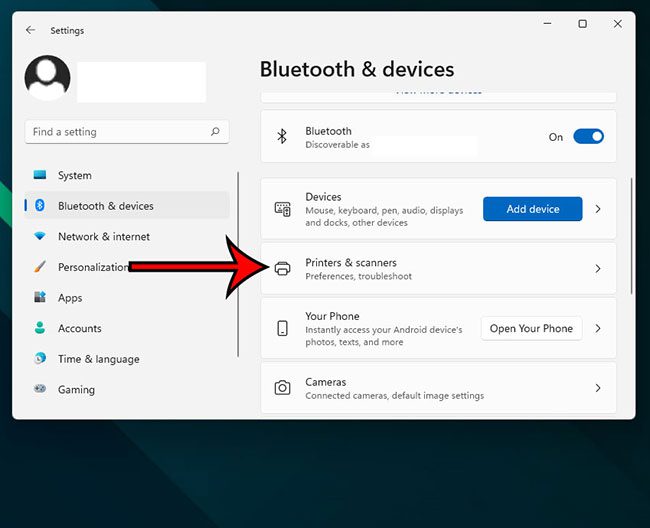
Step 3) Select your printer and choose the ‘Open print queue’ option.
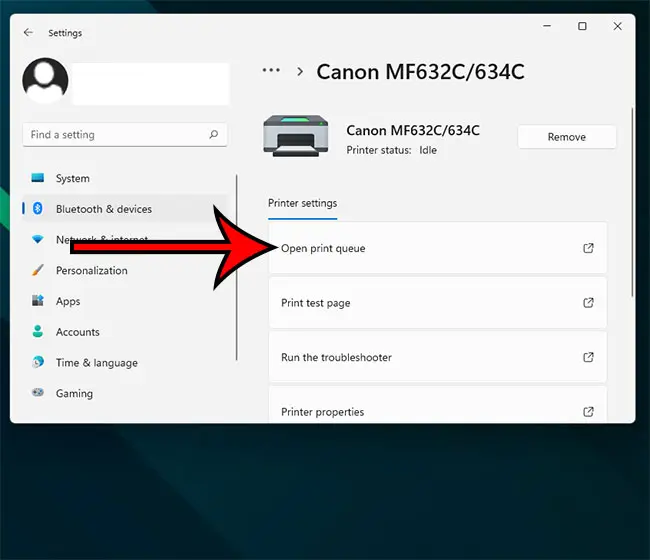
Step 4) A new page will appear, and you need to look for the ‘Printer’ tab on the toolbar. Click on it, and a drop-down menu will arrive. Do you see any ‘Use Printer Offline’ option there? Check out if there’s a tick beside this option. Click on it to remove the tick mark and get your printer online.
<img loading=“lazy” src=“https://www.solveyourtech.com/wp-content/uploads/2022/02/how-to-get-printer-online-windows-10-4.jpg" onerror=“this.onerror=null;this.src=‘https://blogger.googleusercontent.com/img/a/AVvXsEhe7F7TRXHtjiKvHb5vS7DmnxvpHiDyoYyYvm1nHB3Qp2_w3BnM6A2eq4v7FYxCC9bfZt3a9vIMtAYEKUiaDQbHMg-ViyGmRIj39MLp0bGFfgfYw1Dc9q_H-T0wiTm3l0Uq42dETrN9eC8aGJ9_IORZsxST1AcLR7np1koOfcc7tnHa4S8Mwz_xD9d0=s16000';" alt=“turn off the “use printer offline” option - 10”>
For additional coverage of this topic, you can read our printer offline Windows 7 guide.
Method Five – Use Printer Troubleshooter
If the status of your printer keeps coming online briefly and going offline again, you can use a printer troubleshooter to solve the problem and start printing again. In fact, Windows 10 features several troubleshooters to solve the printer offline issues automatically. Here’s how you can perform troubleshooting –
Step 1) Use the dedicated Windows key to open the ‘Start’ menu and go to your settings. You can also press Windows key + I to open the Settings app directly. Click on ‘Devices’ and then on ‘Printers & Scanners.’
Step 2) Click on the ‘Run the troubleshooter’ option from the right-pane. You can find it right beneath the ‘Related Settings’ option.
Step 3) Now, the troubleshooter will run several series of checks. It will also suggest to you some ways to solve the detected problems. It might ask you to set your current printer as a default printer or ask you to update your printer driver. Act accordingly to fix the problems.
Method Six – Clear Your Pending Print Jobs
It’s always preferable to perform one print job at once. When you continue printing for a long time and multiple unfinished print jobs are queued, it might cause printer offline errors. Follow the steps given below to remove the print queue –
Step 1) Open settings and choose ‘Devices.’ Then select ‘Printers & Scanners’ and click on your printer’s name.
Step 2) Now click on ‘Open queue’ to get the list of all the pending documents. Select the ‘ Printer ‘ option from the toolbar at the top and then click ‘Cancel All Documents.’ It should clear all the pending jobs.
Step 3) You can restart your printer and your computer to clear the remaining documents of the print queue.
Method Seven – Use Print Spooler Service
The print spooler service controls the interactions between your computer and printer. You can restart the service to get the printer online. Here’s how you can do it –
Step 1) Open your computer’s start menu, type ‘Services’, and press enter. You can also press Windows Key + R and search by typing ‘Service.msc.’
Step 2) Look for the ‘Print Spooler’ option and right-click on it. Then choose ‘Restart,’ and your offline printer will go online again.
Method Eight – Change Printer Properties
Step 1) Open the control panel of your printer and then go to ‘Devices and Printers.’ Right-click on your printer’s name and select ‘Printer Properties.’
Step 2) From there, click on the ‘Ports’ tab and then choose the printer’s IP address. Now select the option ‘Configure Port.’
Step 3) Check if there’s any tick next to the ‘SNMP Status Enable’ option. Click on it to uncheck the option and then choose ‘OK’ for saving the changes.
Method Nine – Use Printer Software
Many printer manufacturers own printer software to let your windows manage and troubleshoot the printer. You can go to the printer manufacturer’s website to install the software. Or, your printer manufacturer might have provided a CD containing the software.
To check whether the software is installed or not, go to settings and click on ‘Devices.’ Then select ‘Printers & Scanners’, choose your printer’s name, and then ‘Manage.’ If the software is installed, you’ll see the option ‘Open printer app.’
Click on it to open the software and look for troubleshooting options to bring the offline printer status back online.
Method Ten – Reinstall the Printer
If the printer offline message keeps appearing even after you have tried all our methods, you should try to remove the current printer and reinstall it or install a new printer. Here’s how you can remove and reinstall it –
Step 1) Open your computer’s settings and choose ‘Devices.’ From the menu bar, select ‘Printers & Scanners’ and then your printer’s name.
Step 2) Click on ‘Remove Device’ and select ‘Yes’ to remove the current printer.
Step 3) Now go for the option ‘Add printer or scanner.’ Follow the necessary steps to reinstall the printer.
Final Words
So, now you know how to get a printer online Windows 10. Before anything else, try our first three methods to solve the printer offline errors in your Windows 10 easily.
If none of our methods work for your computer, the problem might be hardware-related. In that case, you need to get your printers to a technician or change the printer drivers to solve the issues.
Matthew Burleigh has been writing tech tutorials since 2008. His writing has appeared on dozens of different websites and been read over 50 million times.
After receiving his Bachelor’s and Master’s degrees in Computer Science he spent several years working in IT management for small businesses. However, he now works full time writing content online and creating websites.
His main writing topics include iPhones, Microsoft Office, Google Apps, Android, and Photoshop, but he has also written about many other tech topics as well.
Read his full bio here.
Adding a printer to Windows 11 is a straightforward process that ensures you’re ready to print documents, photos, and more with ease. Here’s what you’ll need to do: access the Windows settings, navigate to Devices, and then add your printer either automatically or manually. You’ll be set up in no time, ready to print anything you need.
How to Add a Printer to Windows 11
In this section, we’ll walk you through the steps to seamlessly add a printer to your Windows 11 device. Let’s dive into the process to get you connected and printing in no time.
Step 1: Open Windows Settings
First, click on the Start menu and select “Settings.”
Opening the Windows Settings is your gateway to managing all device-related configurations, including printers. It’s like the control center for your computer, where all the magic happens.
Step 2: Navigate to Devices
In the Settings menu, find and click on “Devices.”
The Devices section is where you can manage all your connected gadgets, from headphones to printers and everything in between. It’s the hub for all device-related adjustments.
Step 3: Select “Printers & Scanners”
Under Devices, choose “Printers & Scanners” from the sidebar.
This section is specific to all things print-related. Here, you can see existing printers, add new ones, and tweak various printer settings to suit your needs.
Step 4: Click on “Add a Printer or Scanner”
Hit the “Add a Printer or Scanner” button.
When you click this button, Windows 11 will start searching for available printers. It’s like your computer is sending out feelers to connect with nearby printers.
Step 5: Choose Your Printer from the List
Select your printer from the list that appears.
If Windows finds your printer, it will pop up on the list. Select it, follow any additional prompts, and your printer should be good to go!
Once you’ve completed these steps, your Windows 11 device will be connected to the printer. You’ll be able to print documents and photos right from your computer, and you can also tweak printer settings as needed from the “Printers & Scanners” section.
Tips for Adding a Printer to Windows 11
- Ensure your printer is powered on and connected to the same Wi-Fi network as your computer before starting.
- If your printer isn’t detected, try restarting both the printer and your computer.
- Keep your printer drivers updated for optimal performance.
- Check the manufacturer’s website for specific instructions or troubleshooting tips if your printer model isn’t standard.
- Consider setting your new printer as the default to streamline future printing tasks.
What if my printer isn’t showing up?
Make sure the printer is on and connected to the same network as your computer. Restarting your devices can also help.
Can I add a printer with a USB cable?
Yes, connect the printer to your computer with a USB cable, and Windows should automatically detect and install it.
How do I set a printer as the default?
In the “Printers & Scanners” section, click on your printer and choose “Set as Default.”
What are printer drivers, and why do I need them?
Printer drivers are software that helps your computer communicate with the printer. Updated drivers ensure your printer functions correctly.
Can I add multiple printers to Windows 11?
Absolutely, you can add and manage multiple printers through the “Printers & Scanners” settings.
Summary of Steps
- Open Settings via the Start menu.
- Navigate to Devices in the Settings menu.
- Select “Printers & Scanners.”
- Click “Add a Printer or Scanner.”
- Choose your printer from the list.
Conclusion
So there you have it—a simple guide to adding a printer to Windows 11. Connecting your printer to your computer is like opening a door to a new world of possibilities, where you can seamlessly transition your digital creations into physical form. Ensuring that your printer is properly set up allows you to focus more on your projects and less on technical hiccups. Remember, technology is designed to make our lives easier, and understanding how to utilize it is the first step towards making that a reality.
If you encounter any issues, don’t hesitate to revisit the steps or explore additional resources online. Each printer model might have its unique quirks, but the process on Windows 11 remains largely the same. Keep your drivers updated and your printer close by, and you’ll be well-equipped to handle any printing task that comes your way. For more detailed instructions or assistance, consider reaching out to the device’s manufacturer. Happy printing!
Matthew Burleigh has been writing tech tutorials since 2008. His writing has appeared on dozens of different websites and been read over 50 million times.
After receiving his Bachelor’s and Master’s degrees in Computer Science he spent several years working in IT management for small businesses. However, he now works full time writing content online and creating websites.
His main writing topics include iPhones, Microsoft Office, Google Apps, Android, and Photoshop, but he has also written about many other tech topics as well.
Read his full bio here.
Featured guides and deals
Adding a printer by IP address on Windows 11 is a straightforward process that allows you to connect directly to network printers. This is especially handy if the printer is not automatically discovered. By manually adding the printer, you can bypass potential network issues and ensure a stable connection. Essentially, you’ll access the ‘Devices and Printers’ settings, add a printer by specifying its IP address, and finalize the connection with the correct driver.
How to Add Printer by IP Address Windows 11
In this section, I’ll guide you through the steps to add a printer to your Windows 11 computer using its IP address. This method is particularly useful for networked printers not detected automatically.
Step 1: Open Settings
Open the ‘Settings’ app by pressing the Windows key + I.
In the ‘Settings’, you’ll typically find all the options to customize your Windows experience. It’s like the control room for your computer’s features, including printers.
Step 2: Navigate to Devices
Select ‘Devices’ from the menu.
This is where you manage all things related to hardware. From here, you can access the options for adding printers and other devices.
Step 3: Access Printers & Scanners
Click on ‘Printers & Scanners’ in the left sidebar.
This section shows all the printers currently installed on your computer. It’s like a list of all your office’s helpers, ready to print when needed.
Step 4: Add a Printer
Select ‘Add a printer or scanner.’
Windows will start searching for printers. However, since we are adding one by IP, we’ll need to select another option in the next step.
Step 5: The Printer I Want Isn’t Listed
Click on ‘The printer that I want isn’t listed.’
This link allows you to manually add the printer if Windows can’t find it automatically. It’s like asking for directions when you’re lost.
Step 6: Add a Printer Using TCP/IP Address
Choose ‘Add a printer using a TCP/IP address or hostname’ and click ‘Next.’
This option is the gateway to adding your printer using its specific network address.
Step 7: Enter Printer’s IP Address
Enter the printer’s IP address, select ‘Next,’ and follow the prompts.
Here, you’ll type in the unique address that identifies your printer on the network, kind of like its home address in the digital neighborhood.
After completing these steps, your printer should be successfully added to your Windows 11 computer. You can now print documents directly to that printer without hassle. It’s like having a direct line to your printer, ensuring that your connection is as seamless as possible.
Tips for Adding Printer by IP Address Windows 11
- Make sure your printer is turned on and connected to the network before starting the process.
- Verify that you have the correct IP address; a typo can prevent a successful connection.
- Ensure your computer is on the same network as the printer for it to be accessible.
- Keep your printer drivers updated to avoid any compatibility issues.
- If you’re unable to connect, check your firewall settings as they might be blocking the connection.
Why can’t I find my printer’s IP address?
You can locate it on the printer’s display menu or check the network settings via the printer’s control panel. Sometimes, the IP address can also be found on a configuration page printed directly from the printer.
What if my printer isn’t listed after entering the IP address?
Double-check the IP address for errors and ensure both your printer and device are on the same network. It might also be necessary to restart your printer or computer.
Do I need special drivers for my printer?
Most of the time, Windows 11 will automatically install the necessary drivers. However, some printers may require you to download drivers from the manufacturer’s website for full functionality.
Is it possible to add multiple printers using IP addresses?
Yes, you can add multiple printers by repeating these steps for each printer’s specific IP address.
Can I remove a printer once it’s added?
Absolutely! You can go back to ‘Printers & Scanners’ in the settings and select a printer to remove it.
Summary
- Open Settings.
- Navigate to Devices.
- Access Printers & Scanners.
- Add a Printer.
- The Printer I Want Isn’t Listed.
- Add a Printer Using TCP/IP Address.
- Enter Printer’s IP Address.
Conclusion
Adding a printer by IP address on Windows 11 ensures you have a direct, reliable connection to your network printer. It’s a nifty trick that can save you from the headaches of connectivity woes. Once you’ve got the hang of it, managing your printers becomes a breeze, even if they don’t show up automatically.
Don’t let the lack of automatic detection keep you from tapping into your printer’s full potential. By following these steps, you’re taking control of your network setup, ensuring efficient and uninterrupted printing.
If you’re curious about more ways to enhance your Windows 11 experience, consider diving into other networking features like sharing printers across different devices. Remember, technology is here to make your life easier, and knowing how to add a printer by IP address is just one way to ensure you’re making the most out of it. Keep exploring, keep learning, and before you know it, you’ll be the go-to tech guru among your friends and family!
Matthew Burleigh has been writing tech tutorials since 2008. His writing has appeared on dozens of different websites and been read over 50 million times.
After receiving his Bachelor’s and Master’s degrees in Computer Science he spent several years working in IT management for small businesses. However, he now works full time writing content online and creating websites.
His main writing topics include iPhones, Microsoft Office, Google Apps, Android, and Photoshop, but he has also written about many other tech topics as well.
Read his full bio here.
Featured guides and deals
Adding a printer in Windows 11 is a straightforward process. First, ensure your printer is powered on and connected to your computer or network. Then, navigate to the ‘Settings’ app on your Windows 11 device, select ‘Devices,’ and click on ‘Printers & scanners.’ From there, click ‘Add a printer or scanner,’ and follow the prompts to install your printer. In just a few minutes, you’ll be ready to start printing.
How to Add a Printer in Windows 11
Getting your printer up and running with Windows 11 can be a breeze. Follow these steps, and you’ll have your printer set up in no time.
Step 1: Open Settings
First, click on the ‘Start’ menu and select ‘Settings.’
The ‘Settings’ app is your go-to place for configuring various features on Windows 11. You can find it easily by clicking on the Start menu, which is the Windows icon in the bottom-left corner of your screen.
Step 2: Select ‘Devices’
Next, in the ‘Settings’ window, choose ‘Devices’ from the options.
The ‘Devices’ section is where you manage all your connected peripherals, including printers, Bluetooth devices, and more.
Step 3: Click on ‘Printers & scanners’
Under ‘Devices,’ click ‘Printers & scanners’ on the left-hand menu.
This section is specifically for managing printers and scanners that are either connected or need to be connected to your system.
Step 4: Add a Printer
Then, click the ‘Add a printer or scanner’ button.
Windows will start searching for printers in your vicinity, both wired and wireless, and will list them once found.
Step 5: Follow the Prompts
Select your printer from the list and follow the on-screen instructions to complete the setup.
The prompts will guide you through any additional steps, such as installing drivers or confirming your printer’s connection.
After completing these steps, your printer should be successfully added to your Windows 11 system. You can start printing documents, photos, or anything else you need without a hitch.
Tips for Adding a Printer in Windows 11
- Ensure that your printer is properly connected to your computer or network before starting the setup process.
- If your printer isn’t appearing, make sure it’s powered on and try restarting both the printer and your computer.
- For wireless printers, ensure your computer and printer are on the same Wi-Fi network.
- If the automatic driver installation fails, check the printer manufacturer’s website for the latest drivers.
- Regularly check for printer driver updates to maintain compatibility with Windows 11 updates.
Why can’t I find my printer when trying to add it?
Ensure your printer is on and connected to the same network as your computer. If it’s still not showing, try restarting both devices.
How do I set a printer as my default in Windows 11?
Go to ‘Printers & scanners’ in Settings, select your printer, and choose ‘Set as default.’
Do I need internet access to add a printer?
For most cases, you don’t need internet access unless you need to download drivers or are setting up a cloud-based printer.
Can I add multiple printers?
Yes, you can add multiple printers by repeating the setup process for each device.
What if my printer still doesn’t work after adding it?
Try uninstalling and reinstalling your printer, ensuring you follow each step, and check for the latest drivers from the manufacturer.
Step-by-Step Summary
- Open ‘Settings.’
- Select ‘Devices.’
- Click on ‘Printers & scanners.’
- Add a printer.
- Follow the prompts.
Conclusion
Adding a printer in Windows 11 is designed to be simple, even for those who aren’t particularly tech-savvy. With a few clicks and a bit of patience, your printer should be ready to go. Remember to ensure all connections are secure, keep your drivers up to date, and don’t hesitate to consult the printer’s manual or the manufacturer’s website for more help if needed.
As technology continues to evolve at a rapid pace, mastering these everyday tasks can empower you to handle other tech challenges with ease. If you’re interested in exploring more about Windows 11 or printers in general, consider diving into online forums or tech blogs. You’ll not only find answers to specific questions but also gain insights into making the most out of your devices.
So, the next time you need to print out that important document or a beautiful photo, you’ll know exactly how to make it happen smoothly. What are you waiting for? Go ahead and conquer that printer setup!
Matthew Burleigh has been writing tech tutorials since 2008. His writing has appeared on dozens of different websites and been read over 50 million times.
After receiving his Bachelor’s and Master’s degrees in Computer Science he spent several years working in IT management for small businesses. However, he now works full time writing content online and creating websites.
His main writing topics include iPhones, Microsoft Office, Google Apps, Android, and Photoshop, but he has also written about many other tech topics as well.
Read his full bio here.
Featured guides and deals
Adding a printer by its IP address in Windows 11 is a straightforward process that can make printing more efficient, especially in office settings. First, ensure your printer is connected to the network and you know its IP address. Then, navigate to the “Printers & scanners” section in the Windows settings, select “Add a printer,” and choose “The printer that I want isn’t listed.” From there, enter the printer’s IP address and follow the prompts to complete the setup.
Add Printer by IP Address in Windows 11
This step-by-step guide will walk you through the process of adding a printer by its IP address in Windows 11. It’s a reliable way to connect to network printers and ensure seamless printing.
Step 1: Open Windows Settings
Begin by clicking the Start menu and selecting “Settings.”
Windows Settings is your main hub for adjusting system configurations. You can access it quickly by pressing the Windows key + I on your keyboard.
Step 2: Navigate to Devices
Within the Settings menu, click on “Devices.”
This section allows you to manage all your connected devices, including printers, Bluetooth devices, and other peripherals.
Step 3: Access Printers & Scanners
Select “Printers & scanners” from the left sidebar.
You’ll find options related to printers, including the ability to add and troubleshoot them.
Step 4: Add a Printer
Click on “Add a printer or scanner.”
Windows will start searching for available printers. You’ll need to bypass this to enter your printer’s IP manually.
Step 5: Select “The printer that I want isn’t listed”
Click on the link that reads “The printer that I want isn’t listed.”
This option allows you to manually specify the printer’s network location.
Step 6: Choose “Add a printer using a TCP/IP address or hostname”
Select this option and click “Next.”
It provides a way to directly enter the IP address of your network printer.
Step 7: Enter Printer Details
Input the printer’s IP address and select “Next.”
Make sure to enter the correct IP address to ensure a successful connection. Double-check for any typos before proceeding.
After completing these steps, Windows 11 will establish a connection to your printer using its IP address. If everything goes smoothly, your printer will be added to the list of available devices, ready for use.
Tips for Adding a Printer by IP Address in Windows 11
- Ensure your printer is connected to the same network as your computer.
- Double-check the IP address of the printer before entering it.
- If you’re having trouble, restart your printer and computer, then try again.
- Keep your printer’s drivers up to date for optimal performance.
- If the printer isn’t recognized, check firewall settings that might block the connection.
How do I find my printer’s IP address?
You can usually find the IP address on the printer’s display screen under network settings or by printing a network configuration page.
What should I do if Windows can’t find my printer?
Ensure your printer is on the same network, and check for any firewall settings or security apps that might be blocking the connection.
Can I use this method for wireless printers?
Yes, as long as the wireless printer is connected to the same network as your computer.
What if I don’t know the printer’s IP address?
Check your router’s connected devices list or refer to the printer’s manual for instructions on printing a network configuration page.
Will adding a printer by IP address work for all printers?
This method works for most network printers, but it might not work if the printer doesn’t support network connections.
Summary
- Open Windows Settings.
- Navigate to Devices.
- Access Printers & Scanners.
- Add a Printer.
- Select “The printer that I want isn’t listed.”
- Choose “Add a printer using a TCP/IP address or hostname.”
- Enter Printer Details.
Conclusion
Adding a printer by IP address in Windows 11 is an efficient way to manage network printers, especially in environments where printers aren’t directly connected by USB. Understanding how to do this not only saves time but also helps in maintaining an organized workflow.
By following the steps outlined above, you can ensure that your printer is easily accessible whenever you need it. Remember, if you encounter any issues, a simple restart or double-checking settings often resolves them. For more detailed troubleshooting, consider visiting online forums or the printer manufacturer’s website for additional support.
Exploring advanced features like this can boost your tech skills, making you more self-sufficient in managing your devices. So, why wait? Go ahead, connect your printer today and enjoy the hassle-free printing experience that Windows 11 has to offer.
Matthew Burleigh has been writing tech tutorials since 2008. His writing has appeared on dozens of different websites and been read over 50 million times.
After receiving his Bachelor’s and Master’s degrees in Computer Science he spent several years working in IT management for small businesses. However, he now works full time writing content online and creating websites.
His main writing topics include iPhones, Microsoft Office, Google Apps, Android, and Photoshop, but he has also written about many other tech topics as well.
Read his full bio here.
Featured guides and deals
Adding a printer to a Mac is a straightforward process. All you need to do is to connect your printer to your Mac via USB or Wi-Fi, configure your printer settings in the ‘Printers & Scanners’ section of ‘System Preferences,’ and you’re good to go. Follow the detailed steps below to get your printer up and running in no time.
Step by Step Tutorial: Adding a Printer to a Mac
Before diving into the step-by-step process, it’s important to note that these steps will guide you through setting up a printer to work seamlessly with your Mac.
Step 1: Connect Your Printer
Start by connecting your printer to your Mac using a USB cable or by connecting it to the same Wi-Fi network as your Mac.
If you’re using a USB cable, simply plug one end into the printer and the other into your Mac’s USB port. For Wi-Fi printers, make sure both your Mac and printer are connected to the same network. This ensures that your Mac can communicate with the printer without any hitches.
Step 2: Open System Preferences
Next, click on the Apple menu in the top-left corner of your screen and select ‘System Preferences.’
System Preferences is the hub for all settings related to your Mac. By accessing it, you can control various aspects of your machine, including printers.
Step 3: Select Printers & Scanners
In the System Preferences window, find and click on ‘Printers & Scanners.’
This section is dedicated to managing printers and scanners connected to your Mac. Here you can add new printers, remove old ones, and customize your printing settings.
Step 4: Add the Printer
Click on the ‘+’ button to add a new printer. Your Mac will search for available printers, and you should see your printer in the list. Select it and click ‘Add.’
If your printer doesn’t appear in the list, ensure it’s properly connected to your Mac or the same Wi-Fi network. Once you click ‘Add,’ your Mac will install any necessary software or drivers.
Step 5: Configure Printer Settings
After adding your printer, you can configure its settings, such as setting it as the default printer or managing its print queue.
Configuring your printer’s settings allows for a more personalized and efficient printing experience. You can make changes according to your printing needs and preferences.
Once these steps are complete, your printer should be ready to use with your Mac. You can start printing documents, photos, and anything else you need.
Tips for Adding a Printer to a Mac
- Make sure your printer is compatible with your Mac.
- Update your Mac to the latest version of macOS for the best printer support.
- If your printer supports AirPrint, you won’t need to install any additional software.
- You can rename your printer in the ‘Printers & Scanners’ settings for easier identification.
- If you encounter any issues, try restarting both your printer and Mac.
Can I add a printer to a Mac without a USB cable?
Yes, if your printer supports Wi-Fi connectivity, you can add it to your Mac without a USB cable.
Is it necessary to download printer drivers for Mac?
In most cases, Mac automatically installs the necessary drivers, but for some printers, you may need to download them from the manufacturer’s website.
Can I set up multiple printers on my Mac?
Yes, you can set up multiple printers and switch between them in the ‘Printers & Scanners’ settings.
Why doesn’t my printer show up on my Mac?
Make sure your printer is turned on, properly connected, and on the same Wi-Fi network as your Mac. If it still doesn’t show up, try restarting both devices.
How do I remove a printer from my Mac?
Go to ‘Printers & Scanners’ in System Preferences, select the printer you want to remove, and click the ‘-‘ button.
Summary
- Connect your printer to your Mac.
- Open System Preferences.
- Select Printers & Scanners.
- Add the printer.
- Configure printer settings.
Conclusion
Adding a printer to a Mac is a breeze when you follow the proper steps. Whether you’re setting up a home office or simply need to print out some documents for school, knowing how to add a printer to your Mac is a useful skill. Remember to ensure your printer is compatible with your Mac and that you’ve updated to the latest version of macOS for a smooth setup process.
Don’t let the idea of adding a printer intimidate you – it’s much simpler than it seems. With the tips and answers provided in this guide, you should have no trouble getting your printer up and running. And if you ever run into issues, don’t hesitate to consult the printer’s manual or reach out to the manufacturer’s customer support. Happy printing!
Matthew Burleigh has been writing tech tutorials since 2008. His writing has appeared on dozens of different websites and been read over 50 million times.
After receiving his Bachelor’s and Master’s degrees in Computer Science he spent several years working in IT management for small businesses. However, he now works full time writing content online and creating websites.
His main writing topics include iPhones, Microsoft Office, Google Apps, Android, and Photoshop, but he has also written about many other tech topics as well.
Read his full bio here.
Featured guides and deals
Adding a printer to Windows 11 is a straightforward process that can be completed in just a few clicks. By accessing the Settings menu, you can connect your printer via a USB cable or wirelessly through a shared network. Simply navigate to the Devices section, add your printer, and you’re all set to start printing your documents. Whether you’re connecting for the first time or adding a new device, these steps ensure a smooth setup.
How to Add Printer to Windows 11
Connecting a printer to Windows 11 allows you to print your documents easily. Follow these steps to add your printer to the system quickly.
Step 1: Open Settings
Open the Start menu and select the “Settings” gear icon.
Once you’re in the Settings menu, you’ll find a host of options. It’s like the control center for your computer, where you can tweak everything to your liking. This first step gets you where you need to be to start adding your printer.
Step 2: Navigate to Devices
In the Settings menu, click on “Devices.”
This section is your go-to for everything related to devices on your PC. From here, you can manage printers, Bluetooth devices, and more. It’s the hub for all things connected to your computer.
Step 3: Select Printers & Scanners
Choose “Printers & Scanners” from the list on the left.
When you click on “Printers & Scanners,” you enter the place where you can add, remove, or manage your printers. This step takes you one step closer to setting up your printer.
Step 4: Add a Printer
Click on “Add a printer or scanner” and wait for your device to be detected.
Windows will search for printers and scanners that are connected to your network or directly to your computer. This is where the magic happens, as your system identifies available devices.
Step 5: Choose Your Printer
When your printer appears, select it and click “Add device.”
After Windows finds your printer, it’s just a matter of selecting it and confirming that you want to add it. This final step links your printer to your computer, making it ready to use.
After completing these steps, your printer will be successfully connected to your Windows 11 PC. You can now print documents, photos, and much more with ease. The system will automatically install any necessary drivers, ensuring your printer is fully functional.
Tips for Adding a Printer to Windows 11
- Ensure your printer is powered on and connected before starting.
- Use a USB cable for a more stable connection if wireless setup fails.
- Check for any available Windows updates that might include new printer drivers.
- Restart your computer if the printer doesn’t appear immediately.
- Consider using manufacturer software for enhanced printer functionality.
Why is my printer not showing up in Windows 11?
Ensure the printer is turned on and properly connected, either via USB or network. Also, check that your computer is connected to the same network if it’s a wireless printer.
How can I add a wireless printer to Windows 11?
Follow the same steps, and ensure your PC is connected to the same Wi-Fi network as your printer. The printer should appear in the list if set up correctly.
What should I do if my printer isn’t printing?
Check the printer’s connection and ensure it’s selected as the default printer. Also, verify that there’s enough paper and ink.
Can I add multiple printers to Windows 11?
Yes, you can add multiple printers by repeating the steps for each device.
Do I need special software to add a printer to Windows 11?
Windows 11 generally handles printer installation automatically. However, downloading the manufacturer’s software might offer additional features.
Summary
- Open Settings.
- Navigate to Devices.
- Select Printers & Scanners.
- Add a printer or scanner.
- Choose and add your printer.
Conclusion
Adding a printer to Windows 11 is a breeze once you know the steps. The process, which involves navigating to the Devices section of your Settings, is intuitive even for beginners. Once your printer is connected, you’re set to print your documents, photos, and any other files you need.
Windows 11 does a great job of making the setup process user-friendly. It automatically detects most printers and installs the necessary drivers, so there’s not much legwork involved. Of course, if you run into any hiccups, checking your connections or restarting your computer usually does the trick.
In a world where wireless connections are becoming the norm, remember that a trusty USB cable can save the day if your wireless setup gives you a headache. And while Windows handles most things automatically, checking for updates can smooth out potential bumps in the road.
Now that you’ve added your printer to Windows 11, you’re ready to make the most of its capabilities. Whether you’re printing school projects, work reports, or just family photos, having your printer set up properly turns a daunting task into an easy routine. Happy printing!
Matthew Burleigh has been writing tech tutorials since 2008. His writing has appeared on dozens of different websites and been read over 50 million times.
After receiving his Bachelor’s and Master’s degrees in Computer Science he spent several years working in IT management for small businesses. However, he now works full time writing content online and creating websites.
His main writing topics include iPhones, Microsoft Office, Google Apps, Android, and Photoshop, but he has also written about many other tech topics as well.
Read his full bio here.
Sure thing! Let’s dive into how to add a printer to Windows 11. Setting up a printer on Windows 11 is a straightforward process that typically involves just a few clicks. You’ll need to access the Settings app, find the Devices section, and use the Add Printer feature. This will allow your computer to recognize the printer, connect to it, and install the necessary drivers, enabling you to print documents seamlessly.
How to Add a Printer to Windows 11
Adding a printer to Windows 11 involves configuring your computer to recognize and connect with your printer. Follow these steps to make sure everything is set up correctly and smoothly.
Step 1: Open Settings
First, open the Start menu and click on the gear icon to open Settings.
Opening the Start menu and accessing Settings is like unlocking the door to all your computer’s controls. It’s the first step to accessing the Devices section where you’ll connect your printer.
Step 2: Navigate to Devices
In the Settings window, click on “Devices” to proceed.
The Devices tab is your hub for all things hardware-related. Here, you can manage printers, Bluetooth devices, and more. It’s like the command center for your gadgets.
Step 3: Select Printers & Scanners
Choose “Printers & Scanners” from the options on the left-hand side.
Once inside Devices, Printers & Scanners is where you’ll add or manage printers. Think of this as the office printer room where you can see all available machines.
Step 4: Click on Add a Printer or Scanner
Click the “Add a Printer or Scanner” button to begin the search for your printer.
This step prompts Windows 11 to search for any printers connected to your network or directly to your computer. It’s like sending out a search party to find your printer.
Step 5: Select Your Printer
When your printer appears in the list, select it and click “Add Device.”
Selecting your printer from the list is crucial. It’s like spotting your printer in a lineup and pointing it out so your computer knows which one to connect to.
After completing these steps, your Windows 11 computer should recognize your printer and complete the installation. You can now start printing documents, photos, or whatever you need, right from your computer.
Tips for Adding a Printer to Windows 11
- Make sure your printer is turned on and connected to the same network as your computer.
- If your printer is not found, check the printer’s manual for troubleshooting steps.
- Ensure your Windows 11 is updated to avoid compatibility issues.
- Use the printer’s installation CD if available for a smoother setup.
- Consider checking the manufacturer’s website for the latest drivers.
What if my printer doesn’t appear during the search?
If your printer doesn’t appear, ensure it is turned on and connected to the network. Try restarting both your computer and the printer.
Can I add a wireless printer to Windows 11?
Yes, you can add a wireless printer by ensuring it’s connected to the same Wi-Fi network as your computer and following the same steps.
Do I need to install drivers manually?
Windows 11 usually installs drivers automatically, but you can download them from the manufacturer’s website if needed.
How do I know if my printer is compatible with Windows 11?
Most printers compatible with Windows 10 should work with Windows 11, but you can check the manufacturer’s website for specific compatibility info.
How can I remove a printer from Windows 11?
In the Printers & Scanners section, click on the printer you wish to remove and select “Remove Device.”
Summary
- Open Settings.
- Navigate to Devices.
- Select Printers & Scanners.
- Click Add a Printer or Scanner.
- Select your printer and add it.
Conclusion
Now that you’ve learned how to add a printer to Windows 11, you’re all set to enjoy the seamless integration of printing capabilities with your computer. Whether you’re printing a simple document or a vibrant photo, having a printer connected to Windows 11 ensures you have the tools you need right at your fingertips. Remember, this process is designed to be user-friendly, providing a hassle-free experience for both tech enthusiasts and beginners alike.
So go ahead, give it a try, and watch as your digital creations come to life on paper. Whether for work or for play, being able to print quickly and efficiently is a small tech victory worth celebrating. Happy printing!
Matthew Burleigh has been writing tech tutorials since 2008. His writing has appeared on dozens of different websites and been read over 50 million times.
After receiving his Bachelor’s and Master’s degrees in Computer Science he spent several years working in IT management for small businesses. However, he now works full time writing content online and creating websites.
His main writing topics include iPhones, Microsoft Office, Google Apps, Android, and Photoshop, but he has also written about many other tech topics as well.
Read his full bio here.
Featured guides and deals

