Have you ever needed to convert a JPG image to a PDF on Windows 11? It’s easier than you might think! In just a few simple steps, you can transform your image files into professional-looking PDFs without any fancy software. Here’s a quick overview: open the image in the Photos app, select the Print option, choose “Microsoft Print to PDF” as the printer, and voila! Your JPG is now a PDF.
Step-by-Step Tutorial: How To Convert JPG to PDF on Windows 11
This tutorial will guide you through converting a JPG image to a PDF using built-in tools on Windows 11.
Step 1: Open the JPG file
First, locate the JPG file you want to convert and double-click it to open it in the Photos app.
When you open the file, it should automatically open in the Photos app, which is the default image viewer on Windows 11.
Step 2: Click on the Print icon
Next, click on the printer icon in the top-right corner of the Photos app window.
The printer icon is small and looks like a traditional printer; it’s usually next to the three-dot menu icon.
Step 3: Select “Microsoft Print to PDF”
In the printing dialog that appears, choose “Microsoft Print to PDF” from the list of printers.
This option tells Windows to save your image as a PDF instead of sending it to a physical printer.
Step 4: Click on the Print button
After selecting “Microsoft Print to PDF,” click on the Print button at the bottom of the dialog box.
It may seem odd to click “Print,” but this begins the conversion process.
Step 5: Save the PDF
A new window will pop up asking you to choose where to save your new PDF file. Pick a location and click Save.
This step finalizes the conversion, and your PDF will be ready in the location you specified.
Once you’ve completed these steps, your JPG image will be converted to a PDF file and saved on your computer.
Tips: How To Convert JPG to PDF on Windows 11
- Use the Photos app : Windows 11 comes with a built-in Photos app that simplifies the conversion process.
- Check your printer list : If “Microsoft Print to PDF” isn’t available, you may need to install or enable it.
- Batch conversion : If you have multiple images, consider using a free online service for batch conversion.
- File naming : Name your PDF files clearly to avoid confusion later.
- Resolution settings : Ensure your image resolution is high enough for a clear PDF output.
Can I convert multiple JPG files to a single PDF?
Yes, but you’ll need to use third-party software or an online service, as the Photos app only converts one file at a time.
Is there a file size limit for converting JPG to PDF?
While there’s no strict limit, very large images may take longer to convert and could result in large PDF files.
Do I need internet access to convert JPG to PDF?
No, this process doesn’t require an internet connection since it uses built-in Windows features.
Will converting a JPG to PDF affect the image quality?
Generally, no. The quality should remain the same unless the resolution settings are changed.
Can I edit the PDF after converting it from JPG?
Basic editing is possible with tools like Microsoft Edge, but for advanced features, you’ll need dedicated PDF editing software.
Summary: How To Convert JPG to PDF on Windows 11
- Open the JPG file.
- Click on the Print icon.
- Select “Microsoft Print to PDF.”
- Click on the Print button.
- Save the PDF.
Conclusion
Converting a JPG to PDF on Windows 11 is a straightforward task that anyone can tackle, thanks to the built-in tools. Whether you’re consolidating photo collections, preparing documents for work, or just experimenting with file formats, this guide has got you covered.
Now that you know how to convert JPG to PDF on Windows 11, why not give it a try? It’s a handy skill that can make your digital life just a bit easier.

Matthew Burleigh has been writing tech tutorials since 2008. His writing has appeared on dozens of different websites and been read over 50 million times.
After receiving his Bachelor’s and Master’s degrees in Computer Science he spent several years working in IT management for small businesses. However, he now works full time writing content online and creating websites.
His main writing topics include iPhones, Microsoft Office, Google Apps, Android, and Photoshop, but he has also written about many other tech topics as well.
Read his full bio here.
Featured guides and deals
Printers can be difficult ot work with, and troubleshooting them can take you to a lot of different places on your computer.
One common issue that can arise with a printer is when it says that it is offline, even though it’s turned on and seems to be hooked up correctly.
Our tutorial below will show you some steps to try so that you can learn how to change a printer from offline to online.
How to Switch a Printer from Offline to Online in Windows 7
- Click Start , then Devices and Printers .
- Right-click the printer, then click See what’s printing .
- Select the Printer tab, then click Use printer offline to clear the check mark.
Our guide continues below with additional information on how to switch a printer from offline to online , including pictures for these steps.
If you’re lucky, then this should work and your queued documents will start printing. However, sometimes this isn’t enough and you need to do some more troubleshooting. We discuss those additional troubleshooting steps further in this article.
Printers can be frustrating when they are not working correctly, due largely to the fact that errors can occur for seemingly no reason. Whether your print jobs don’t look right, you are getting constant paper jams, or printing is inconsistent or erratic, printers are often some of the most difficult electronic devices to work with. So if your printer is showing as offline and you can’t print, then you may be trying to figure out why it’s showing as offline when the printer was working before and nothing has changed.
One issue that you might encounter is Windows 7 not being able to connect to your printer to send documents that you want to print. Further investigation into the issue might lead you to discover that Windows 7 thinks the printer is offline.
There are several reasons why this might be occurring, so you will need to follow the instructions in this tutorial to learn how to change your printer from offline to online .
Once your printer is back online, it should then start printing the documents that you have sent to the printer that are currently sitting in your print queue.
How Do You Change a Printer from Offline to Online? (Guide with Pictures)
Windows is recognizing your printer as being offline because it is unable to communicate with the printer. This can be caused by several different situations, so you need to pinpoint exactly from where the problem is originating.
These steps will show you how to change a printer from offline to online from a Windows laptop or desktop computer.
Step 1: Click theStartbutton at the bottom-left corner of your screen, then clickDevices and Printers.
Click Start then choose Devices & Printers .
Step 2: Right-click the printer that is showing as offline, then clickSee what’s printing.
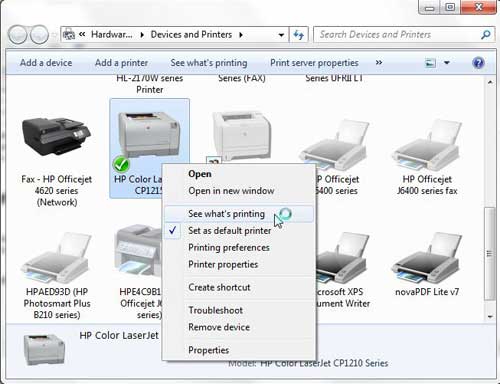
Right-click on the printer, then select See what’s printing.
Step 3: Click thePrinterlink at the top of this window, then click theUse Printer Offlineoption to remove the check mark.
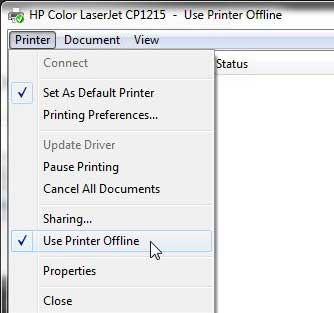
Select Printer , then Use Printer Offline .
Now that you know how to change printer from offline to online you can try this step whenever your computer is unable to print a file.
If this solved your problem, then you are all set and can continue with your printing . However, if this did not resolve the issue, then there are some more troubleshooting steps you can try.
Additional Troubleshooting for an Offline Printer in Windows 7
Check that the printer is turned on, and that the USB cable is properly connected to both the back of the printer and your computer. If your printer is wireless, you may need to restart the printer, then restart your computer to see if you can re-establish the wireless connection.
If you are using a wireless printer, have you recently changed your router, or changed the name of the wireless network ? If so, you may need to update your wireless printer with the new wireless network settings . If your wireless printer does not feature a control panel on the printer that allows you to change the network settings, you may need to temporarily connect the printer to your computer with a USB cable to modify the settings.
If your wired printer is still showing an offline status, despite the fact that it is plugged in and connected to your computer, then there may be a problem with the port to which the device is connected.
How to Change a Printer Port in Windows 7
You can use these steps to change the printer port for a printer that has been set up in Windows 7.
Step 1: Return to theDevices and Printersmenu, right-click your printer, then clickPrinter Properties.
Step 2: Click thePortstab at the top of the window, choose the correct port from the list at the center of the window, clickApply, then clickOK.
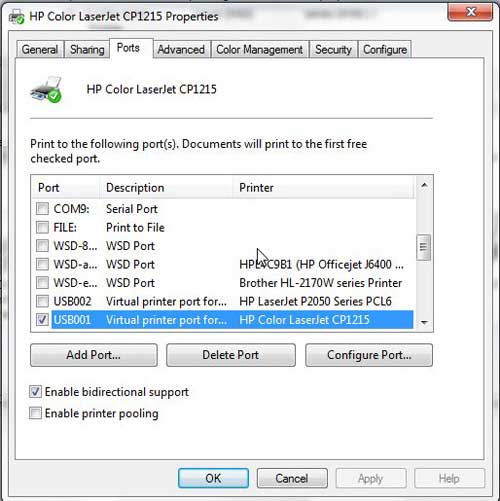
If you are still unable to print, then one final option you can attempt is to stop and restart the print spooler . You can follow the instructions in this article to learn how to manage the print spooler.
If you are still unable to print after following all of these instructions, then you may need to uninstall, then reinstall your printer. You can remove a printer from your computer by right-clicking the printer, then clicking Remove device . Once the printer has been uninstalled, follow your printer’s installation guide to properly reinstall it.
Why Is My Printer Offline?
The sections in the article above provide a bunch of different options and settings that you can check in order to see why your printer might be offline.
There are so many potential reasons that your printer might be offline that it’s hard to point to one specific reason why it might be happening.
In my experience, the best, simplest, and most useful thing that you can do when your printer is showing as offline is to simply restart the printer.
This can resolve issues related to a wireless printer that isn’t connected to a network, it can force the print spooler to restart, and it can fix print jobs that are stuck in the print queue.
While your printer is going through the process of restarting it can be helpful to restart your computer, too. And if you have a wireless printer and have been experiencing connection issues with other wireless devices as well, then even restarting your modem and your router might not be a bad idea.
How do I restart a printer?
You can reboot your printer by pressing the Power button on the printer, waiting until it has completely turned off, then pressing the Power button again to turn it back on.
How can I check my printer status?
If you aren’t sure whether or not your printer is in Printer Online or Printer Offline mode in Windows 11, then a quick way to check is to go to Start > Settings > Devices > Printers & Scanners .
You can then click on your printer and choose the Open Queue option. When you open print queue windows on your computer you can see any documents that are currently queued up to print.
When the printer window is open you can click the Printer option in the menu bar, then make sure the Use Printer Offline option isn’t selected.
How can I change the printer driver that my printer is currently using?
If you go to Start > Settings > Devices > Printers & Scanners then select your printer, you can click the Printer properties button, which will open a new window.
In this window you can choose the Advanced tab, then click the Driver drop down menu and choose a different driver. You could also click the New Driver button, which will launch the Add Printer Driver Wizard .
How do I run printer troubleshooter in Windows 11?
If you aren’t sure what the problem is, you can try the Windows utility that will cycle through a bunch of potential settings to try and fix the problem.
This means it will do things like restart printer related services, such as restarting the print spooler service and checking for outdated printer drivers.
You can do this by clicking the Windows button in the taskbar, searching for “Printer” then selecting the Printers & scanners option.
You can then select your printer and click the Run the troubleshooter option.
Why is my HP Printer offline?
The Hp printer offline Windows 11 steps are the same for Hewlett Packard printers as they are for other printers.
You need to open the Windows Settings menu, choose Bluetooth and devices, then select Printers & scanners.
You can then click on the default printer or whatever printer you want to check, then make sure Use printer offline is not selected.
If it is offline and clicking that option doesn’t put it back online, then you will need to go through the troubleshoot printer offline process of checking the printer cable (or the network status for wireless printers) and restarting the printer and the computer.
If that doesn’t work, then you may printer offline – how to put online instructions on the printer manufacturer’s website, which may involve reinstalling printer software and drivers.
Matthew Burleigh has been writing tech tutorials since 2008. His writing has appeared on dozens of different websites and been read over 50 million times.
After receiving his Bachelor’s and Master’s degrees in Computer Science he spent several years working in IT management for small businesses. However, he now works full time writing content online and creating websites.
His main writing topics include iPhones, Microsoft Office, Google Apps, Android, and Photoshop, but he has also written about many other tech topics as well.
Read his full bio here.
Featured guides and deals
If you’re used to working with printers frequently, you have probably faced situations where your machine is ready to print, but the printer status on your Windows 10 is showing offline.
This can happen due to minor network connectivity issues, poor printer connection, paper jams, or other problems.
Whatever the reason is, you should know how to get a printer online in Windows 10 to fix the problems and get your work done.
To make the task easier for you, we will discuss a number of methods of solving the printer offline issue and tell you some simple tricks to avoid such problems in the future.
We will cover it all, from minor paper jam problems to complex setting issues. So, let’s dive right in.
How to Use the Windows 10 Printer Troubleshooter to Get the Printer Online
- Press the Windows key + I to open Settings.
- Choose Devices in the left column.
- Select Printers and Scanners .
- Choose to run the troubleshooter.
- Let the troubleshooter run and perform the suggested tasks.
Our guide continues below with additional information on getting your Windows 10 printer online, including some other options that you can try which might help to resolve the situation.
Sometimes you will need to send someone a picture of the items that appear on your screen. Our article on how to screenshot on Acer laptops can help you with that.
How to Solve Windows 10 Printer Offline Issues – 10 Options
As you already know, your computer can show that your printer is offline for many reasons. Some problems are so trivial that you can solve them within moments, even without any printer technician. Below are some effective and detailed methods to solve the printer offline error yourself:
Method One – Perform Physical Checks
To bring back a printer online, you should properly check all the wire connections. If your machine is a local printer or a network printer and needs to be connected by a USB cable or Ethernet cable, you should check out whether the connection is firm or not. Try checking out the cable at both ends of your USB port and printer.
If the cable is too loose or broken, replace it with a new one. Also, try to use multiple USB ports on your computer to make sure that the problem isn’t in your cable, ethernet port, or USB ports.
Method Two – Check Your Internet Connection
If you have connected your printer using a Wi-Fi network, check out if the device’s network is working properly. The printer’s status might go offline if the network is too slow or if the network keeps dropping.
So, check out the condition of the network from the built-in options of your printer. If you don’t know how to connect your printer through Wi-Fi, look for instructions in your owner’s manual. Sometimes the printer status goes offline when you try to connect it using a VPN (virtual private network.)
In that case, you must disconnect the VPN connection and restart your printer. Otherwise, you can also try a more efficient VPN connection and adjust the VPN configuration to access the local network.
Method Three – Restart Your Printer and Computer
The process of restarting your devices is called power cycling. It’s a very common technique to solve minor glitches in your devices – power off both your PC and printer first. Then disconnect your printer from the computer and unplug its power cable.
Wait for 30 seconds before restarting the printer. When your printer is switched on, turn on your computer again and check if the offline status is turned online.
Method Four – Use Printer Offline Option
If our previously mentioned methods fail to solve your printer problems, it’s time to do some work manually. You need to open settings on your computer and make some necessary changes to the printer offline option. And here’s how to use the printer offline option in Windows 11 –
Step 1) On your windows computer, click on the ‘Start’ option from the bottom of your screen. From there, click on the ‘Settings’ option and then ‘Bluetooth and devices.’
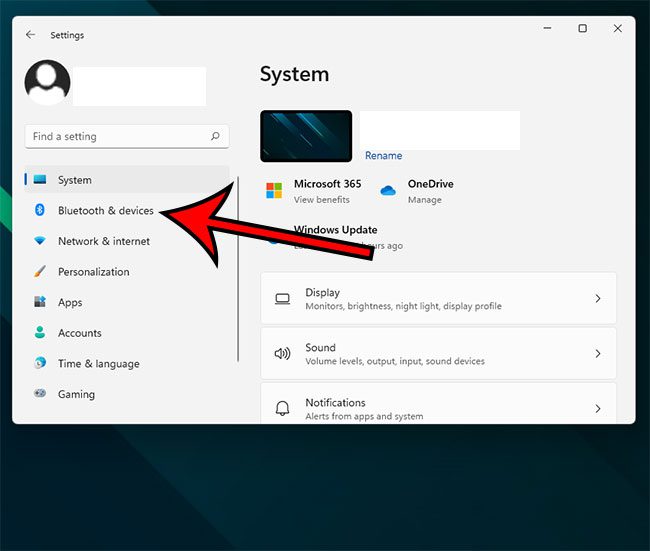
Step 2) Now select the option called ‘Printers & Scanners’.
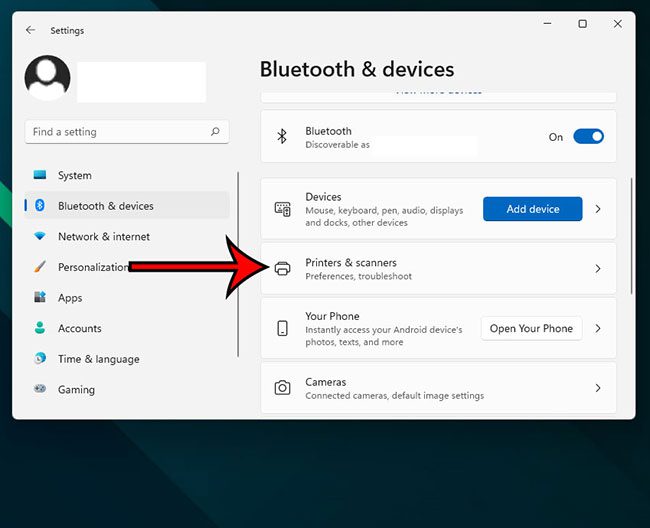
Step 3) Select your printer and choose the ‘Open print queue’ option.
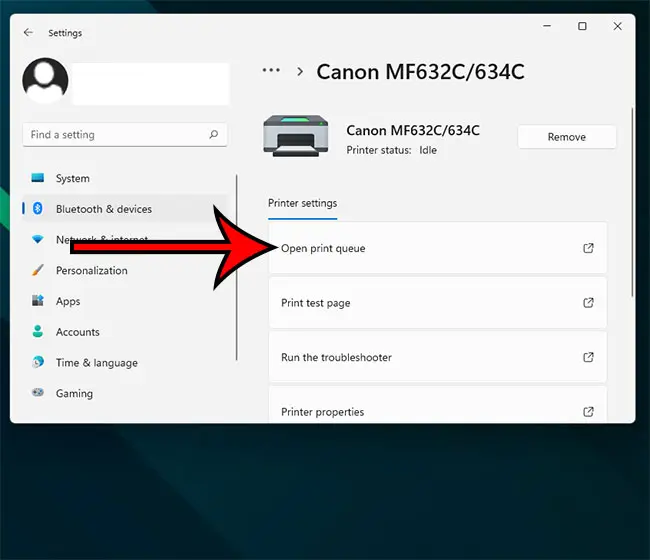
Step 4) A new page will appear, and you need to look for the ‘Printer’ tab on the toolbar. Click on it, and a drop-down menu will arrive. Do you see any ‘Use Printer Offline’ option there? Check out if there’s a tick beside this option. Click on it to remove the tick mark and get your printer online.
<img loading=“lazy” src=“https://www.solveyourtech.com/wp-content/uploads/2022/02/how-to-get-printer-online-windows-10-4.jpg" onerror=“this.onerror=null;this.src=‘https://blogger.googleusercontent.com/img/a/AVvXsEhe7F7TRXHtjiKvHb5vS7DmnxvpHiDyoYyYvm1nHB3Qp2_w3BnM6A2eq4v7FYxCC9bfZt3a9vIMtAYEKUiaDQbHMg-ViyGmRIj39MLp0bGFfgfYw1Dc9q_H-T0wiTm3l0Uq42dETrN9eC8aGJ9_IORZsxST1AcLR7np1koOfcc7tnHa4S8Mwz_xD9d0=s16000';" alt=“turn off the “use printer offline” option - 9”>
For additional coverage of this topic, you can read our printer offline Windows 7 guide.
Method Five – Use Printer Troubleshooter
If the status of your printer keeps coming online briefly and going offline again, you can use a printer troubleshooter to solve the problem and start printing again. In fact, Windows 10 features several troubleshooters to solve the printer offline issues automatically. Here’s how you can perform troubleshooting –
Step 1) Use the dedicated Windows key to open the ‘Start’ menu and go to your settings. You can also press Windows key + I to open the Settings app directly. Click on ‘Devices’ and then on ‘Printers & Scanners.’
Step 2) Click on the ‘Run the troubleshooter’ option from the right-pane. You can find it right beneath the ‘Related Settings’ option.
Step 3) Now, the troubleshooter will run several series of checks. It will also suggest to you some ways to solve the detected problems. It might ask you to set your current printer as a default printer or ask you to update your printer driver. Act accordingly to fix the problems.
Method Six – Clear Your Pending Print Jobs
It’s always preferable to perform one print job at once. When you continue printing for a long time and multiple unfinished print jobs are queued, it might cause printer offline errors. Follow the steps given below to remove the print queue –
Step 1) Open settings and choose ‘Devices.’ Then select ‘Printers & Scanners’ and click on your printer’s name.
Step 2) Now click on ‘Open queue’ to get the list of all the pending documents. Select the ‘ Printer ‘ option from the toolbar at the top and then click ‘Cancel All Documents.’ It should clear all the pending jobs.
Step 3) You can restart your printer and your computer to clear the remaining documents of the print queue.
Method Seven – Use Print Spooler Service
The print spooler service controls the interactions between your computer and printer. You can restart the service to get the printer online. Here’s how you can do it –
Step 1) Open your computer’s start menu, type ‘Services’, and press enter. You can also press Windows Key + R and search by typing ‘Service.msc.’
Step 2) Look for the ‘Print Spooler’ option and right-click on it. Then choose ‘Restart,’ and your offline printer will go online again.
Method Eight – Change Printer Properties
Step 1) Open the control panel of your printer and then go to ‘Devices and Printers.’ Right-click on your printer’s name and select ‘Printer Properties.’
Step 2) From there, click on the ‘Ports’ tab and then choose the printer’s IP address. Now select the option ‘Configure Port.’
Step 3) Check if there’s any tick next to the ‘SNMP Status Enable’ option. Click on it to uncheck the option and then choose ‘OK’ for saving the changes.
Method Nine – Use Printer Software
Many printer manufacturers own printer software to let your windows manage and troubleshoot the printer. You can go to the printer manufacturer’s website to install the software. Or, your printer manufacturer might have provided a CD containing the software.
To check whether the software is installed or not, go to settings and click on ‘Devices.’ Then select ‘Printers & Scanners’, choose your printer’s name, and then ‘Manage.’ If the software is installed, you’ll see the option ‘Open printer app.’
Click on it to open the software and look for troubleshooting options to bring the offline printer status back online.
Method Ten – Reinstall the Printer
If the printer offline message keeps appearing even after you have tried all our methods, you should try to remove the current printer and reinstall it or install a new printer. Here’s how you can remove and reinstall it –
Step 1) Open your computer’s settings and choose ‘Devices.’ From the menu bar, select ‘Printers & Scanners’ and then your printer’s name.
Step 2) Click on ‘Remove Device’ and select ‘Yes’ to remove the current printer.
Step 3) Now go for the option ‘Add printer or scanner.’ Follow the necessary steps to reinstall the printer.
Final Words
So, now you know how to get a printer online Windows 10. Before anything else, try our first three methods to solve the printer offline errors in your Windows 10 easily.
If none of our methods work for your computer, the problem might be hardware-related. In that case, you need to get your printers to a technician or change the printer drivers to solve the issues.
Matthew Burleigh has been writing tech tutorials since 2008. His writing has appeared on dozens of different websites and been read over 50 million times.
After receiving his Bachelor’s and Master’s degrees in Computer Science he spent several years working in IT management for small businesses. However, he now works full time writing content online and creating websites.
His main writing topics include iPhones, Microsoft Office, Google Apps, Android, and Photoshop, but he has also written about many other tech topics as well.
Read his full bio here.
Featured guides and deals
Smartphones and mobile devices like the iPhone have become so capable and powerful that they can perform many of the same functions as a desktop or laptop computer.
Therefore you might be wondering how to add a printer on your iPhone 11 so that you can print a file directly from the device.
If you were an early adopter of cell phones or even the first smartphone options, then you may have become so accustomed to avoiding printing that you may not have tried it in a while.
Printing from mobile devices used to be difficult, if not impossible, so many users simply chose to keep printing only from their computers.
But the prevalence and market dominance of mobile devices has increased so much that printing was something that needed to be addressed.
This happened with a feature called AirPrint that makes it much easier for iPhones to communicate with printers over a wireless printer.
Our guide below will show you how to add a printer to your iPhone 11 and how to complete a print job from the device.
How to Add an iPhone Printer
- Open an app or file to print.
- Tap the Share button.
- Choose Print .
- Tap Select Printer .
- Touch the printer you wish to use.
- Change print job settings as needed.
- Tap Print .
Our article continues below with additional information on how to add a printer on an iPhone, including pictures of these steps.
How to Use a Printer from an iPhone (Guide with Pictures)
The steps in this article were performed on an iPhone 11 in iOS 14.6. This section assumes that you have an AirPrint-enabled printer that is already setup up to use AirPrint over your wireless network.
Step 1: Open the app with the file you want to print, or open the specific file.
Step 2: Touch theShareicon (the one with the square and an upward pointing arrow.)
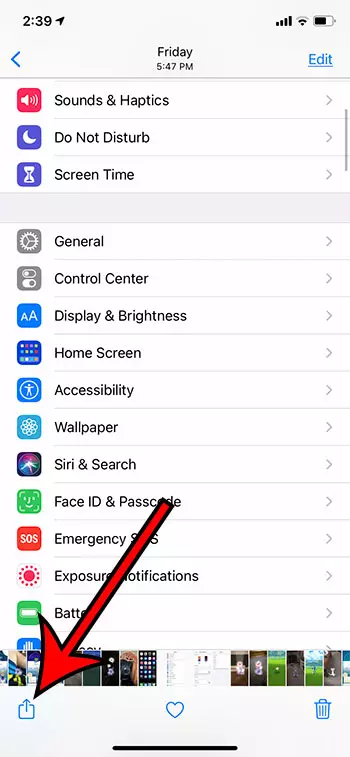
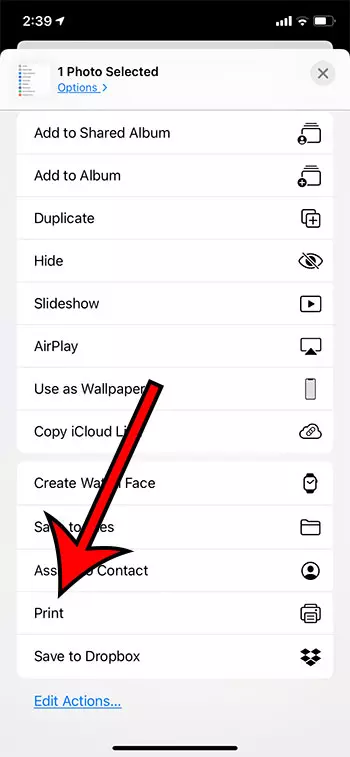
Step 3: Choose thePrintoption.
You may need to scroll down a little bit to find this option.
Step 4: Tap theSelect Printerbutton.
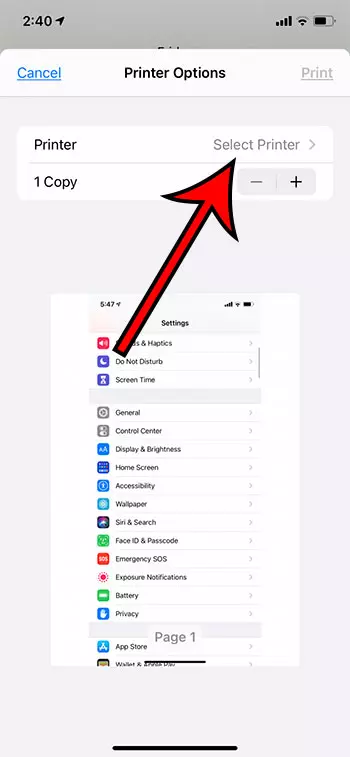
Step 5: Choose the printer that you would like to add and print from.
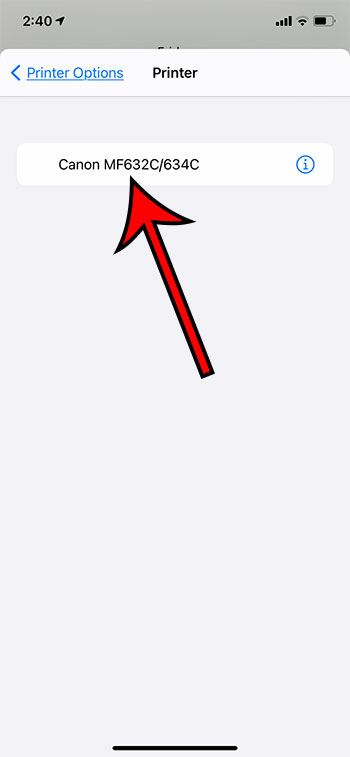
Step 6: Adjust any of the additional options on this print menu like the number of copies, then tapPrintat the top right corner of the screen.
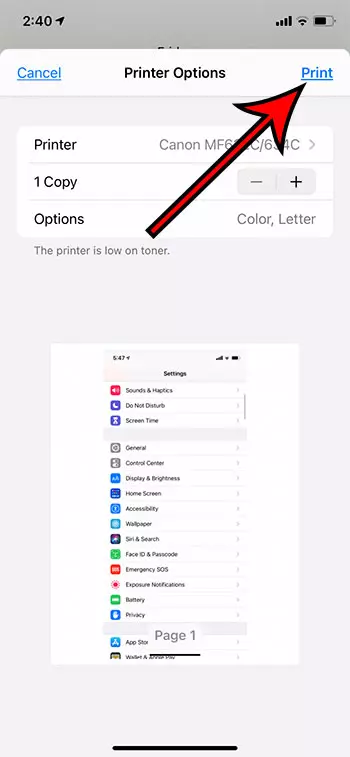
Now that you know how to print from an iPhone you will be able to create physical copies of documents without needing to involve a laptop or desktop computer in the process.
What is Airprint?
The AirPrint feature is one that was rather uncommon and mysterious a decade ago but has become much more common and popular. In fact, most new wireless printers are now compatible with AirPrint, as it is such an important feature.
AirPrint is a wireless protocol that Apple takes advantage of to allow their device to print wirelessly. Most printers will need to install their own drivers on a computer in order to print, but the AirPrint feature is kind of a universal driver that any iPhone, iPad, or iPod Touch can use to print without needing to go through the headache of actually installing the files for a printer on to the device.
How to Print from an iPhone
If you are used to printing from a computer and haven’t yet had to try this from a device that uses iOS, then it’s a little tricky the first time.
Your iPhone lumps the printing option in with other sharing options, such as sending data through a text message or an email. Therefore, you need to open the Share menu from within the app or file which you want to print.
Step 1: Open the app or file.
Step 2: Tap the Share icon.
Step 3: Choose the Print option.
Step 4: Select the printer and adjust the other print settings, then tap the Print button.
Note that you will need to be connected to the same wireless network as the printer that you want to use for this print job.
Most of the items that you would want to print from a default iPhone app are going to use this “Share” method to print the file. However, you might need to follow some different steps to print from within other apps. For example, to print from Google Docs on an iPhone you would open the document, tap the three dots at the top-right, choose Share & export , then tap Print .
How to View or Cancel a Print Job on an iPhone
When you create a print job on your iPhone it is handled through an app called the Print Center. If the print job is just a single page then the printing process can occur very quickly, and you probably won’t be able to view or cancel that job.
But if the document that you are trying to print has a lot of pages, or if you are printing a lot of copies, then you might be able to view or modify it.
You can open the Print Center from the App Switcher. On older iPhone models you can open the App Switcher by pressing the Home button twice. On newer iPhone models you swipe up and to the left or right from the bottom of the Home screen.
You can then select the Print Center app and either look at the print job or tap the Cancel Printing button to cancel the print job.
How to Print To a Printer Without AirPrint from an iPhone (Using an App)
The specifics of this method are a little generic, as these steps will depend on the brand of printer. But, generally speaking, you are going to need to download an app to your iPhone for your printer, enable the Wi-Fi option on your printer, then connect to the network that the printer creates through your iPhone.
- Open the App Store .
- Search for your printer’s app. (Not all printers are going to have a dedicated app. Consult your printer’s documentation to see if this option is available.)
- Download and install the app.
- Enable Wi-Fi on your printer so that the printer is broadcasting its wireless network.
- Open the Settings app on your iPhone.
- Choose the Wi-Fi option.
- Select the printer’s Wi-Fi network and enter the password if prompted.
- Open the file that you want to print.
- Tap the Share icon.
- Select the Print option.
- Choose the printer.
- Tap Print .
Alternatively, you might open the printer app instead, then browse through your iPhone’s files through the app and send them to the printer that way.
If you can’t use an app or AirPrint for your printer then you might be able to use a USB solution. Note that this will likely require you to purchase some additional equipment.
Can You Print from Your iPhone to a Printer Without a Wi Fi Network?
Yes, this is possible, but it is going to require some additional steps and equipment. The iPhone is a wireless device, o its default method of connection is going to rely on wireless connectivity.
The section below discusses how to establish a wired connection between a printer and the iPhone using the USB port on the back of the printer and the Lightning port on your iPhone.
How to Use a USB Cable to Print from an iPhone to a Non AirPrint Printer
- Connect the USB end of the cable to the port on the back of the printer.
- Connect the other end of the cable to the iPhone’s lightning port.
- Confirm the device connection on your iPhone.
- Open the file you want to print.
- Tap the Share icon.
- Choose the Print option.
- Touch the Select Printer button.
- Select the USB-connected printer.
- Tap the Print button.
More Information on How to Add Printer to iPhone 11
While you can often get good prints from files, images, or other objects that you print from your iPhone, I have found that the prints typically look better when printed from a computer.
Often this is due to scaling, but it can also come from the fact that AirPrint can occasionally have some compatibility issues with combinations of phones and printers.
The different settings that are available on the print options menu can include things like the number of copies, color options, or a range selection.
These options aren’t always available for everything, though, so you might need to experiment with opening the file in different apps if you need to switch between black and white or color, for example.
Some printers that aren’t compatible with AirPrint, or aren’t wireless, can employ an email-based solution for printing.
Essentially what you are doing is assigning an email address to your printer, then you are sending the file that you want to print to that email address.
Since you can create and send emails with the Mail app on your iPhone, this can be another convenient option for printing from the device. Consult your printer’s manual for more information on setting up this feature, as its availability and functionality will vary between printer models.
One final thing to consider is setting up a wireless print server for your wired printer.
While this can be complicated and more expensive than simply purchasing a new, wireless printer, it can solve your printing issue.
Establishing the connection to that printer may involve some additional steps, but they are much more approachable when wireless capability has been added to the printer.
Matthew Burleigh has been writing tech tutorials since 2008. His writing has appeared on dozens of different websites and been read over 50 million times.
After receiving his Bachelor’s and Master’s degrees in Computer Science he spent several years working in IT management for small businesses. However, he now works full time writing content online and creating websites.
His main writing topics include iPhones, Microsoft Office, Google Apps, Android, and Photoshop, but he has also written about many other tech topics as well.
Read his full bio here.
Featured guides and deals
While printers are becoming much easier to install and use in newer Windows operating systems, they can still be a large source of frustration for many people.
The combination of drivers, moving printer parts, print queues, and everything else that is involved with a printer can make it difficult to pinpoint the exact problem.
Our general printer troubleshooting guide below can walk you through a couple common issues that you should check if your printer isn’t working properly and you aren’t sure why.
We have written about working with several specific models of printers, such as the HP Officejet 4620 and the Officejet 6700, but there are so many different models of printers on the market, with so many different issues, that what works for one printer might not work for another.
So if you have a printer that is giving you problems on your Windows 7 computer, then there are a few steps that you can try which might work for any printer.
Note that each additional step under the sections below should only be tried if the previous step did not work.
If one of the steps has resolved your issue, then you do not need to continue with the rest of the steps in the section.
Additionally, these are generalized guidelines, that are meant to be effective for a wide range of printers. Individual printer models all work differently, so there may be some specifics about your printer that are not mentioned below.
This includes things such as exact locations of commands on Print menus, and physical characteristics and properties of the machine.
You can check out our printer offline Windows 7 article if your printer is currently showing as offline even though it seems to be hooked up properly.
Problem: I sent a document to the printer, but it’s not printing.
Troubleshooting steps (Note that each additional step in this section should only be tried if the previous step did not work. If one of the steps has resolved your issue, then you do not need to continue with the rest of the steps in the section):
Confirm that the printer is turned on.
Is the printer connected to the computer? Be sure to check both ends of the cable. If the printer is connected wirelessly, then make sure that the printer and the computer are both connected to the same wireless network. The method for connecting wirelessly will vary from model to model, so you may need to find the specific documentation for your printer. This article , for example, shows how to connect an HP Officejet 4620 to a wireless network.
Turn the printer off, wait ten seconds, then turn it back on.
Click the Start button at the lower left corner of the screen, click Devices and Printers , then right-click your printer and choose the See what’s printing option. If there is something there, then click the Printer option in the menu bar and choose the Cancel All Documents option. You will then need to re-send the document to the printer.
Stop and restart the print spooler. This option is a little more complicated, so you will need to read this article to learn how to do it.
Turn off the printer, turn off the computer, restart the computer, then restart the printer.
Are you trying to print labels, or on a paper size that is different than the default size for your printer? If your printer has a manual feed tray, then the computer may be trying to send the document to that tray instead. Try putting the paper in the manual feed tray and see if that causes the document to print.
Uninstall the printer, disconnect the printer cable from the back of your computer, then re-install the printer.
Problem: Documents are printing with spaces, missing colors, and general errors.
Troubleshooting steps (Note that each additional step in this section should only be tried if the previous step did not work. If one of the steps has resolved your issue, then you do not need to continue with the rest of the steps in the section):
Clean the printheads (inkjet printers), or run maintenance utilities (laserjet printers). Note that the specific ways to perform these operations will vary depending upon your printer model. If you are having print quality issues, then you should find the manual or troubleshooting guide to determine the necessary steps for resolving print quality issues for your specific printer model.
Open your printer and check the printer cartridges for any physical defects.
Replace printer cartridges. Printer ink can dry out if you do not use your printer very often.
Problem: Printer is showing as offline, but it is turned on and connected.
Troubleshooting steps (Note that each additional step in this section should only be tried if the previous step did not work. If one of the steps has resolved your issue, then you do not need to continue with the rest of the steps in the section):
Turn the printer off, then turn it back on again. Sometimes a printer will enter a sleep or hibernation mode and the computer won’t recognize it when it wakes up.
Unplug the printer cable from the back of the computer, wait ten seconds, then plug it back in again.
Click Start , click Devices and Printers , then right-click the printer and click Printer Properties . Click the Ports tab at the top of the window, make note of the USB port that is currently selected, then select a different USB port. Click Apply , then click OK . Check to see if the printer is still showing as Offline. If so, repeat this step, but with a different port.
Uninstall the printer, disconnect the printer cable, then re-install the printer. If you are still having problems, then there may be an issue with old print drivers. You can read this article to learn how to remove old print drivers.
Problem: My printer is printing everything very small or very big.
Troubleshooting steps (Note that each additional step in this section should only be tried if the previous step did not work. If one of the steps has resolved your issue, then you do not need to continue with the rest of the steps in the section):
- Try printing something from a different program. For example, if everything is printing small from Internet Explorer, then open Notepad or Microsoft Word and see if it is still printing small. If Word or Notepad prints correctly, then the print scale in Internet Explorer may have been changed. You can open Internet Explorer, click the gear icon at the top-right of the screen, click Print , then click Print Preview . Click the size drop-down menu at the top of the window and select a larger zoom level, such as 100%. Try and print the document again to confirm that it is now printing at the correct size.
Note that most popular programs have a scale option on the Print screen, so you will need to find this option if other programs are able to print at the correct size. Additionally, programs like Microsoft Word and Excel can have scaling that applies on a per-document basis. This means that one document might be configured to print at a 50% scale, while others might be set to print at the default 100% scale.
- Click the Start button, click Devices and Printers , then right-click your printer and click the Printing Preferences option. The exact steps from here will vary based on your specific printer model, but there should be a “Zoom” or “Scaling” option. Change this to 100%, then click the Apply or OK button to confirm your changes.
Problem: My printer is printing everything in black and white.
Troubleshooting steps (Note that each additional step in this section should only be tried if the previous step did not work. If one of the steps has resolved your issue, then you do not need to continue with the rest of the steps in the section):
Confirm that you have a color printer.
If you have a color printer, then confirm that there are color cartridges installed.
Check the ink levels of your printer cartridges to confirm that the color cartridges are not depleted.
Try and print a document, but check the settings on the Print menu before you click the Print button . Check for a color or black and white option, and make sure that the black and white option is not selected. The exact steps for this will vary based on the program and the printer being used. If you do not see an option like this on the default screen, then click the Advanced tab and check for this setting there.
Click the Start button, click Devices and Printers , then right-click your printer and choose the Printing Preferences option. Look for a Color Mode option on one of the tabs and confirm that the Color option is selected.
Additional troubleshooting steps
You can print a test page to confirm that your printer is set up properly. Click the Start button, click Devices and Printers , then right-click your printer and choose the Printer Properties option. Click the Print Test Page option near the bottom of the window. If the test page does not print, then you will need to follow the steps above to resolve an issue where documents are not printing.
If you have a paper jam, open the paper tray and check for any visual jams there. If you do not see anything, then check the back of the printer to see if there is an additional access door there. If so, open this access door and check there for a paper jam. If there is nothing there, then open the ink compartment and check to see if there is any jammed paper that can be accessed from there. If you still do not see anything, then try turning off the printer and turning it back on.
If your printer has a touchscreen or display, then check it for any error messages. If there is an error message, try and resolve it using the on-screen steps. If not, then search online for the identified issue and your printer model.
Are you printing to the correct printer? It is not uncommon to have many printers installed on the same computer, and certain programs may try to send a document to the incorrect printer. You should also confirm that the correct printer is selected as your default printer. You can set a default printer by clicking the Start button, clicking Devices and Printers , then right-clicking your printer and selecting the Set as default printer option. You can read this article for additional instructions on setting a default printer in Windows 7.
If nothing is working to resolve your print issue, then the best option may be to completely uninstall your printer, then install it again. This article will walk you through the process.
This article from Microsoft can provide additional help in identifying any issues that you may be having with your printer.
Additional Sources
Matthew Burleigh has been writing tech tutorials since 2008. His writing has appeared on dozens of different websites and been read over 50 million times.
After receiving his Bachelor’s and Master’s degrees in Computer Science he spent several years working in IT management for small businesses. However, he now works full time writing content online and creating websites.
His main writing topics include iPhones, Microsoft Office, Google Apps, Android, and Photoshop, but he has also written about many other tech topics as well.
Read his full bio here.
Printers can be a source of problems for many computer users. They have a lot of moving parts that need to be replaced, and they require constant replenishment of very expensive ink and toner.
A printer that was previously working perfectly may even start saying that it’s offline, such as described in this article .
Occasionally a printer will break, stop working, or get replaced, so you need to uninstall it from your computer.
Often this can be as simple as removing the device from Windows 7. But it can also be a little more complicated than that, especially if the problem that you were having was related to a bad driver installation or a hidden file stuck in your print queue.
Fortunately, our guide below can provide some solutions to the problems that you are having as you try to completely remove a printer from your Windows 7 computer.
Removing a Printer and Printer Driver in Windows 7
The guide below is going to show how to first remove a printer in Windows 7, then how to remove a print driver in Windows 7, then a couple of troubleshooting steps if a print driver will not uninstall.
You are going to be performing some actions that require you to have administrator access to Windows 7, so make sure that you are either signed into an Administrator account, or that you have the administrator credentials for your computer.
Before you get started, check that your printer doesn’t have a specific program installed with it. In some cases uninstalling the program for the printer can take care of the entire uninstall process for you. Simply disconnect the printer cable from the computer first, then uninstall the printer program like any other program in Windows 7 by following the steps in this article .
If this is not an option for you, however, follow the steps below.
Step 1: Disconnect the printer cable from the computer, if it is a USB connection.
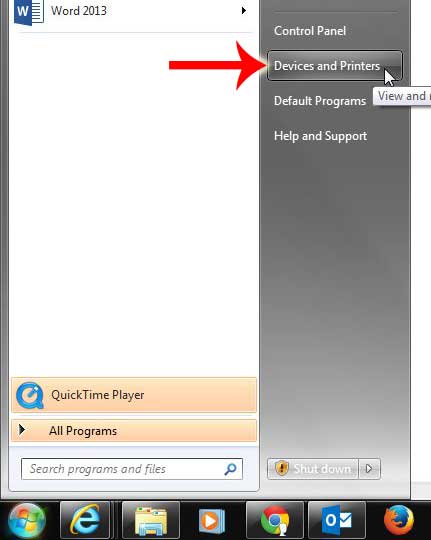
Step 2: Click the Start button at the bottom-left corner of the screen.
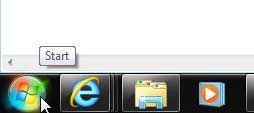
Step 2: Click Devices and Printers in the column at the right side of the menu.
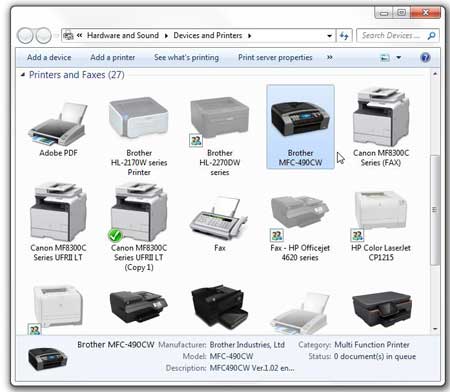
Step 3: Locate the printer that you want to remove. In this case we are removing the Brother MFC 490CW.
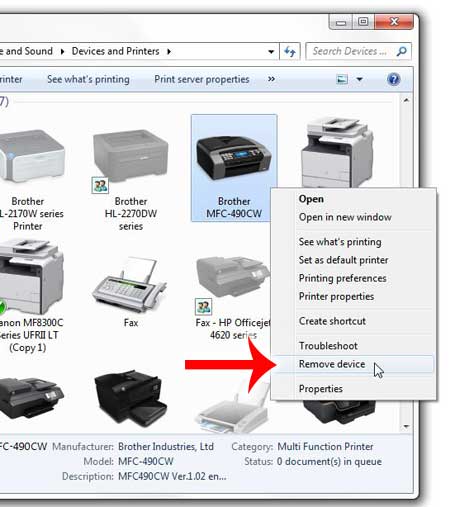
Step 4: Right-click the printer, then click Remove Device .
Step 5: Click the Yes option to confirm that you want to remove the printer. Don’t close this window just yet, though.
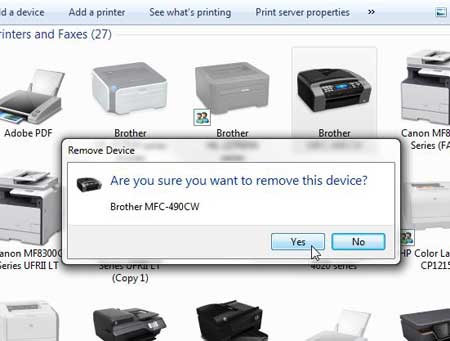
At this point the printer is removed from your computer, and you will no longer be able to print to it. For a lot of people, this is a sufficient stopping point. But the driver is still on the computer, and if you have been trying to re-install the printer but keep encountering an error, then it could be an issue with the driver. So you can follow the steps below to delete the print driver as well.
Step 6: Click another printer icon once to select it, then click the Print Server Properties option in the blue bar at the top of the window.
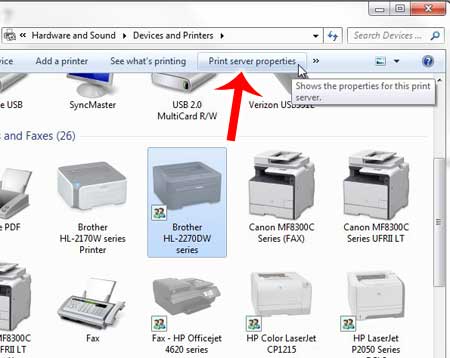
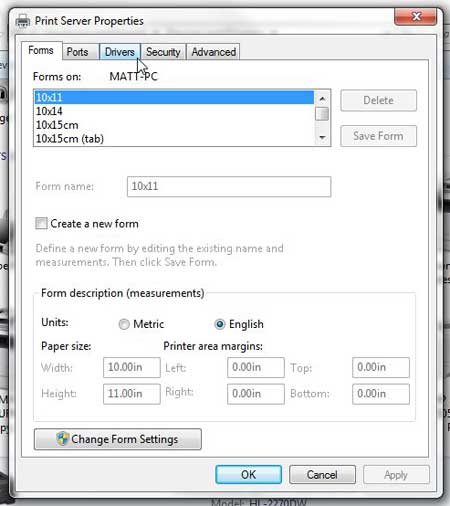
Step 7: Click the Drivers tab at the top of this window.
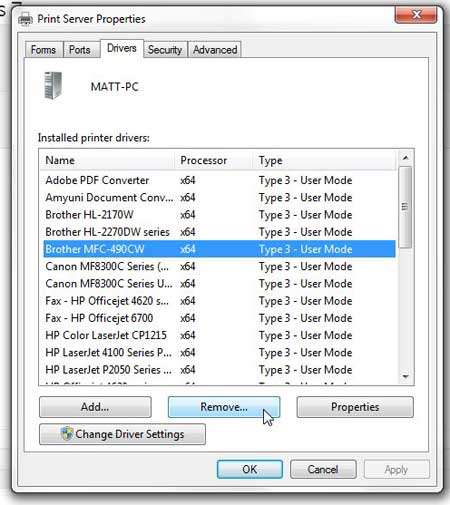
Step 8: Click the driver for the printer you just removed, then click the Remove button .
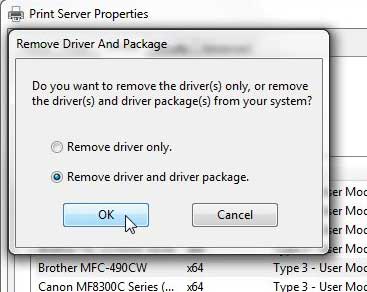
Step 9: Click the Remove driver and driver package option, then click the OK button.
Step 10: Click the Yes button to confirm that you want to delete the driver and driver package.
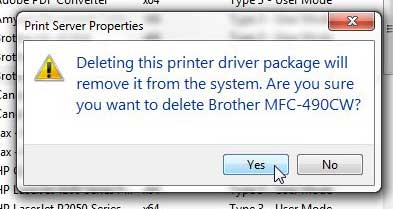
Step 11: Click the Delete button to complete deletion of the printer driver.
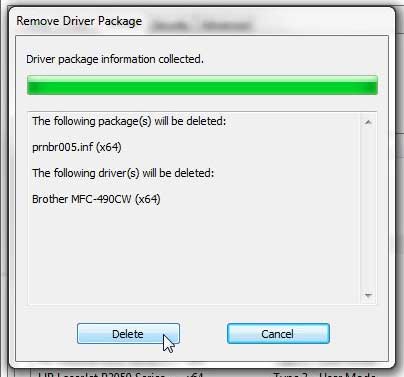
You might get an error at this point saying that the driver is in use and that it cannot be deleted. This can occur if there is a document that is still stuck in the print queue , so we need to take a couple more steps.
Step 12: Click the Start button at the bottom-left corner of your screen again, type “ Services ” into the search bar at the bottom of the menu, then hit Enter on your keyboard.
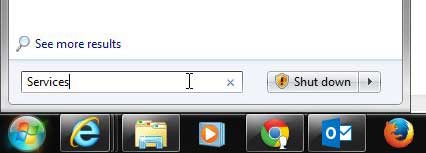
Step 13: Scroll down and select the Print Spooler option.
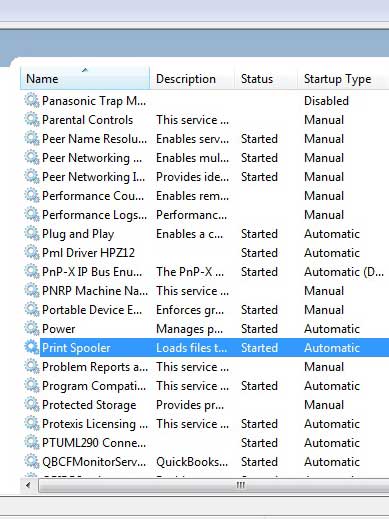
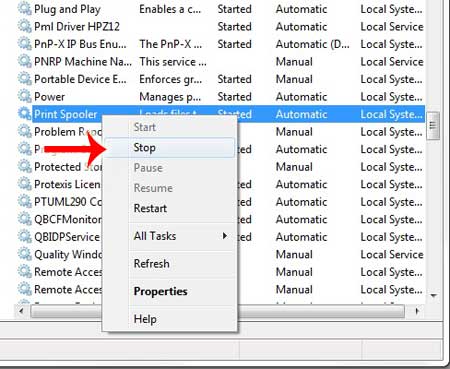
Step 14: Right-click on Print Spooler , then click the Stop option. Leave this window open for now.
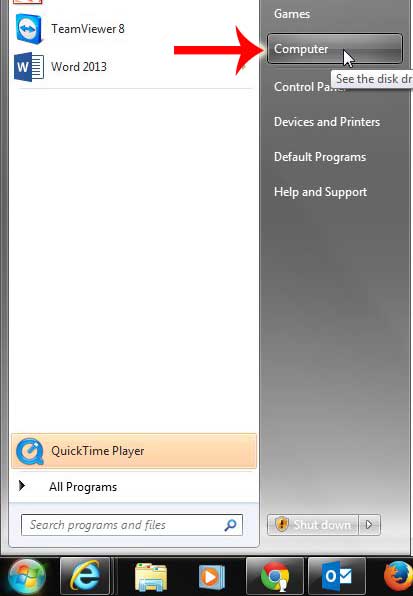
Step 15: Click the Start button at the bottom-left corner of the screen, then click Computer in the column at the right side of the window.
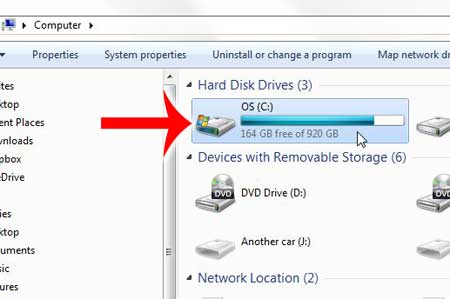
Step 16: Double-click your hard drive at the center of the window.
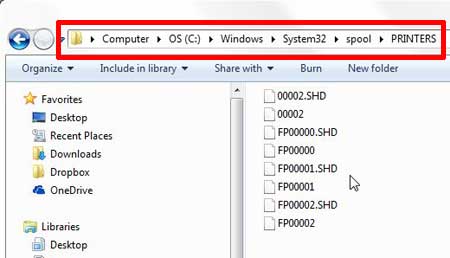
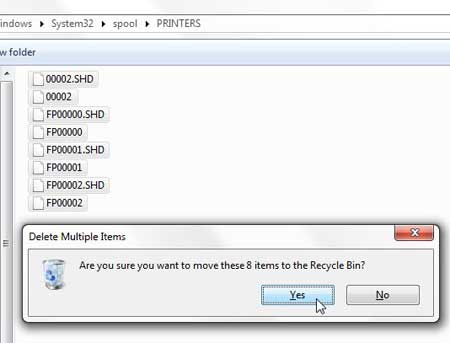
Step 17: Double-click the Windows folder, double-click System32 , double-click spool , then double-click PRINTERS . So the location you want to be at now is C:\Windows\System32\spool\PRINTERS , which should look similar to the image below.
Step 18: Press Ctrl + A on your keyboard to select everything in this folder, press the Delete key on your keyboard (the actual key that says “Delete” or “Del”. Not the “Backspace” key), then click Yes to confirm that you want to delete these files.
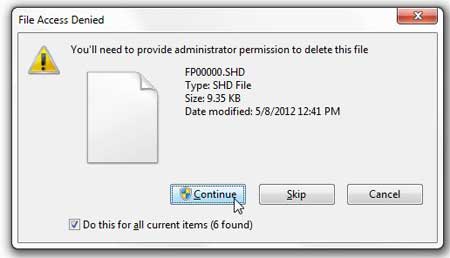
Step 19: Click Continue and provide Administrator access to confirm that you want to delete these files.
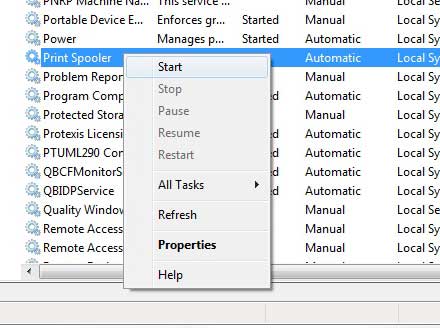
Step 20: Return to the Services window that we left open in Step 14, scroll to Print Spooler , right-click it, then click Start .
Step 21: Return to the Devices and Printers window that we left open all the way back in Step 5.
Step 22: Repeat Step 6 – Step 11 to delete the printer driver. The error telling you that it was in use should now be gone.
If you are still unable to delete the printer driver, then restart your computer, and repeat steps 6-11 one more time. If the driver is deleting but the driver package remains, then there may be another user on your computer that has the printer installed on their profile. You will also need to delete the printer and the driver for those users as well.
If you are still experiencing problems, then you should contact your printer’s manufacturer for additional troubleshooting steps related to that specific printer model.
If you’re getting rid of a problematic printer and are in search of a good new one, the Brother HL-2270DW could be the right printer for you. It is a wireless black and white laser printer that is fast, easy to use, and affordable. Check it out here .
Matthew Burleigh has been writing tech tutorials since 2008. His writing has appeared on dozens of different websites and been read over 50 million times.
After receiving his Bachelor’s and Master’s degrees in Computer Science he spent several years working in IT management for small businesses. However, he now works full time writing content online and creating websites.
His main writing topics include iPhones, Microsoft Office, Google Apps, Android, and Photoshop, but he has also written about many other tech topics as well.
Read his full bio here.
Featured guides and deals
When smartphones first started to gain popularity, the prospect of printing something from them seemed like a pipe dream. Printers were already hard enough to deal with on a computer, and it seemed unlikely that it could work on a phone.
But the Google Docs app started adding new features like the ability to add small numbers in Google Docs , and it became apparent that the app was going to gain most of its desktop counterpart’s functionality.
Now we are also able to print from Google Docs on our iPhone or Android device, and it’s surprisingly accessible.
Most modern printers have some sort of network compatibility, meaning that devices on the same network as the printer can use that printer if they have that capability.
Mobile phones, but those that use the iOS and Android operating systems, are now able to print wirelessly to printers that support it. Plus, most of the apps that you would want to print from, such as creative apps and productivity apps, will usually support some type of printing functionality in addition to the other features they offer, like file sharing .
Our guide below will show you how to print through the Google Docs app on your iPhone or Android phone, plus we will address some of the common issues that might arise if you can’t make it work.
How to Print from the Google Docs Mobile App
- Open Docs.
- Choose a document.
- Tap the three dots.
- Select Share & export .
- Choose Print .
- Touch Select Printer .
- Chose a printer.
- Tap Print .
Our guide continues below with additional information on printing from the Google Docs app, including pictures of these steps.
How to Print from Google Docs on an iPhone (Guide with Pictures)
The steps in this section were performed on an iPhone 11 in iOS 14.6. These steps will also work on other iPhone models using this same version of iOS, as well as in most other versions of iOS. I am using the most current version of the Google Docs app that was available at the time this article was written.
Step 1: Open theDocsapp on your iPhone.
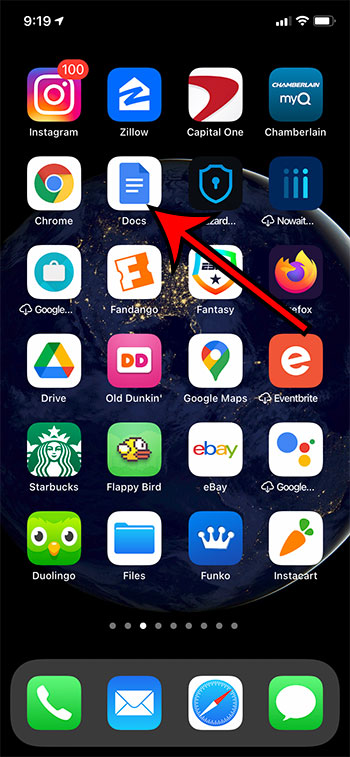
Step 2: Select the document that you want to print.
Step 3: Touch the three dots at the top-right of the screen.
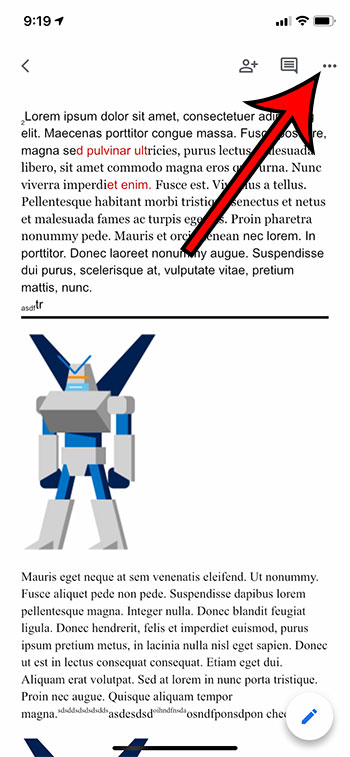
Step 4: Select theShare & exportoption.
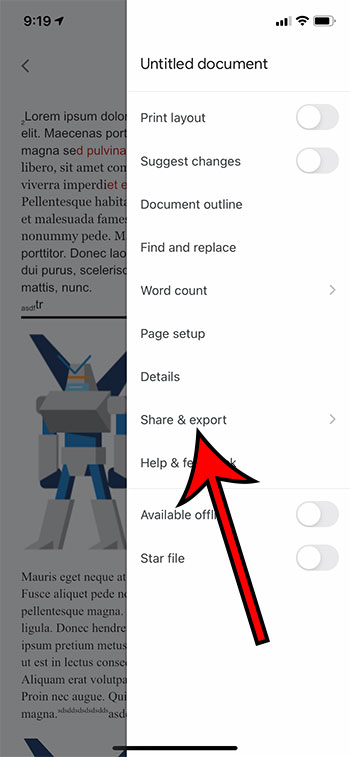
Step 5: ChoosePrint.
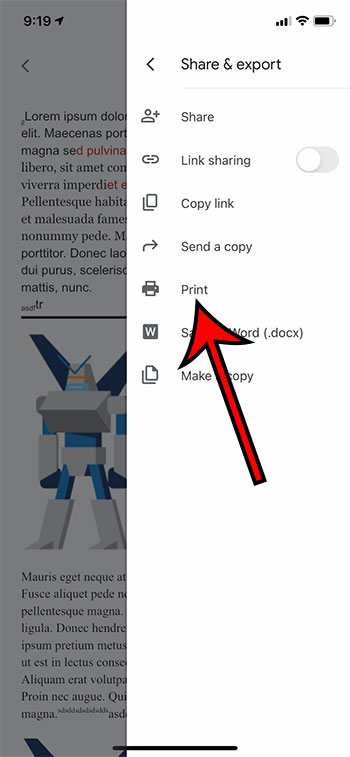
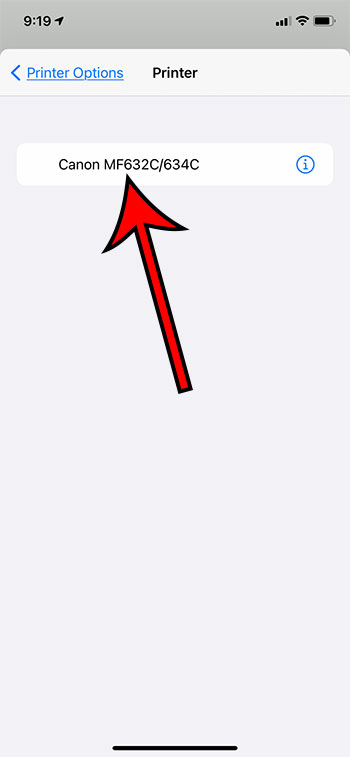
Step 6: Tap theSelect Printeroption.
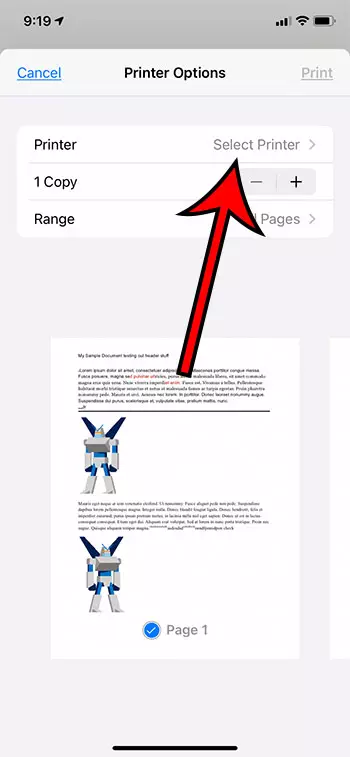
Step 7: Choose your printer.
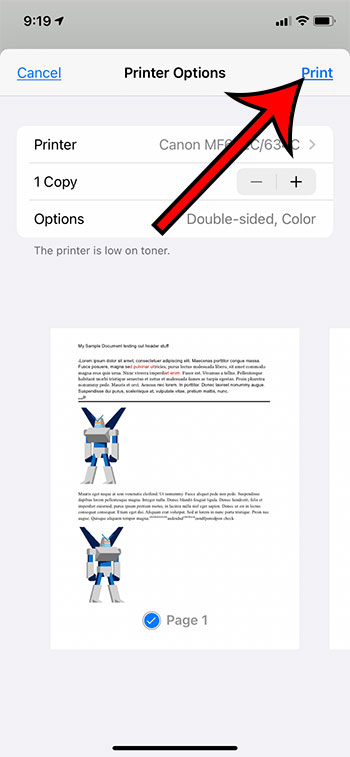
Step 8: TapPrintat the top-right corner of the screen.
Our article continues below with information on how to print from your Android device.
How to Print from Google Docs on Android (Guide with Pictures)
The steps in this section were performed on a Google Pixel 4A, using Android 11. I am using the most current version of the Docs app that was available when I wrote this article.
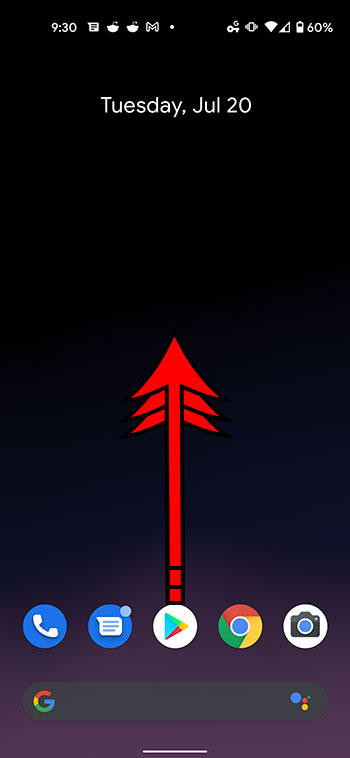
Step 1: Swipe up from the center of the screen.
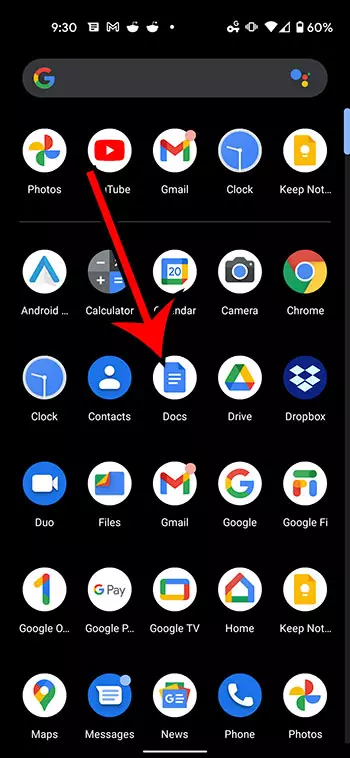
Step 2: Touch theDocsicon.
Step 3: Choose the document from your Google Drive that you want to print.
Step 4: Tap the three vertical dots at the top of the screen.
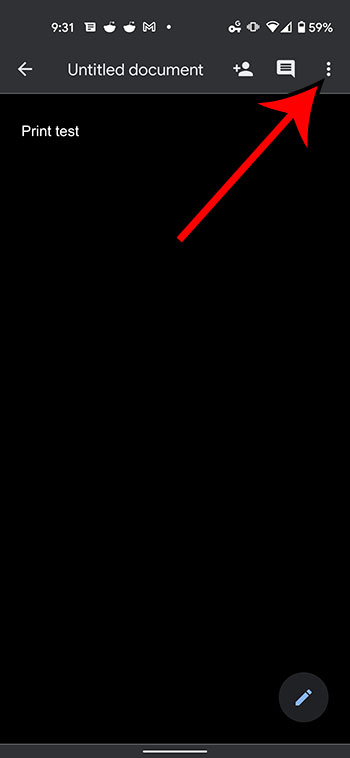
Step 5: Select theShare & exportoption from the menu on the right side of the screen.
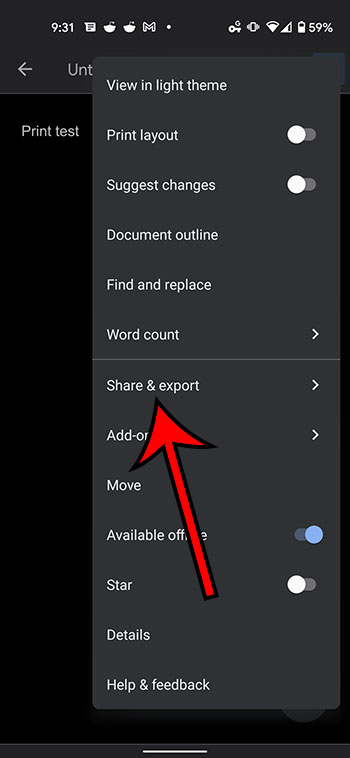
Step 6: ChosePrintfrom the list of sharing options.
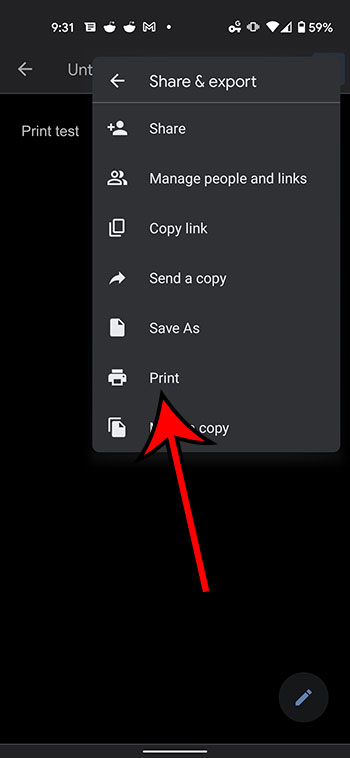
Step 7: Touch theSelect a printerdropdown at the top of the screen.
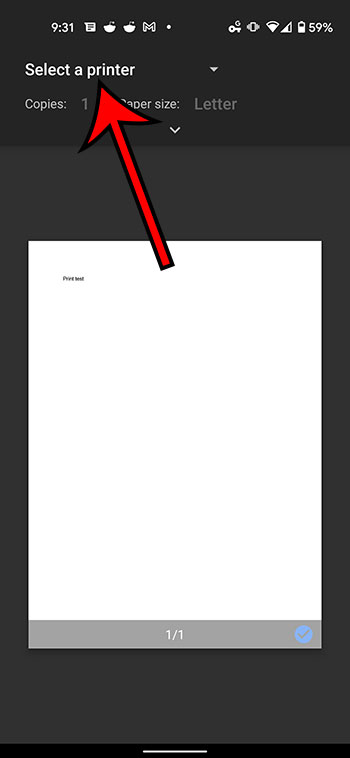
Step 8: Select the desired printer from the list of printing options.
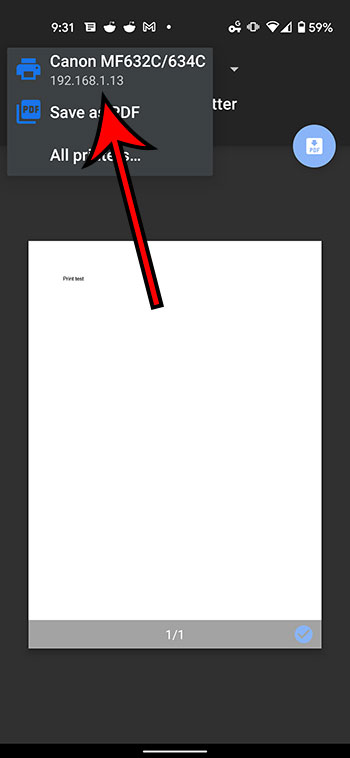
Step 9: Tap thePrinticon.
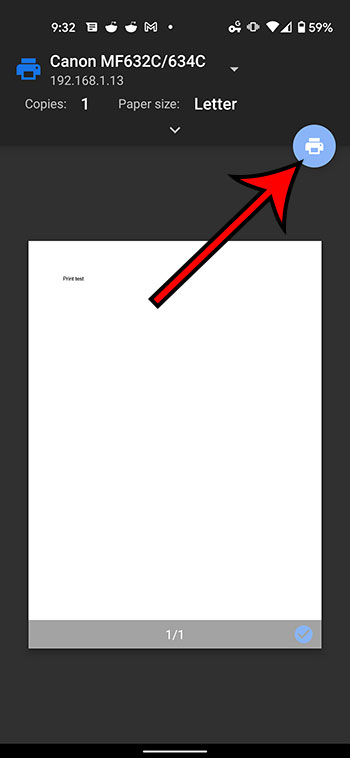
Our article continues below with additional information on printing from Google Docs.
Why Isn’t My Printer Listed?
Trying to resolve printing issues can be a tricky prospect, as printers are notoriously difficult to work with. When you combine this with the fact that you are printing from a mobile device, then there is a strong possibility that something isn’t going to work properly.
The first thing to check when you are trying to print is that your mobile device is connected to the same wireless network as the printer. If your iPhone or Android device is not on Wi-Fi, then you probably won’t see your printer.
A second consideration is that the printer may not be turned on. Many modern printers will turn off if they haven’t been used in a while. If you don’t see the printer but know that it should be there, try power cycling the printer (turning it off and on again) then wait a few minutes to see if it shows up in your mobile device’s printer list.
One final option to check is whether or not the printer is AirPrint compatible. Since you aren’t able to install print drivers on your mobile device, your printer will use a feature called AirPrint so that it can communicate with your phone. However, not all printers have this feature. Additionally, not all printers are network compatible. If your printer isn’t connected to your local network, either wirelessly or via an ethernet cable, then you probably won’t be able to communicate with the printer through your smartphone.
What is Google Cloud Print
There is a feature that is available as part of your Google Account that is called Google Cloud Print. If you have installed the Chrome browser on your computer and have added it as a printer that is available through Cloud Print, then this gives you some additional printing options.
After you select the Print option from the Share & export menu, you will see Google Cloud Print option listed there as well. If you choose that option you can follow the instructions on screen to select a printer and send it there. This means that you can even print Google Docs files on a printer that is in a completely different location.
How to Print from Google Docs on a Laptop or Desktop Computer
Printing a Google Docs document from your computer via a Web browser is a similar process to printing other documents. I am going to perform the steps below using the Chrome browser, but you can also use another browser like Firefox, Edge, or Safari.
Step 1: Navigate to https://docs.google.com and open the Google Docs file that you would like to print.
Step 2: Select File at the top-left of the window.
Step 3: Choose the Print option at the bottom of the menu.
Step 4: Adjust the print settings as needed, then click the blue Print button.
More Information on How to Print from Google Docs on iPhone or Android
The number of options that you can adjust when printing from your iPhone or Android device is pretty large.
When you have the Printer options menu open on your iPhone you will be able to specify the number of copies that you want to print, as well as the range, whether or not to print double-sided, and whether you want to print in black and white or color. Other document settings can be changed through the Page setup menu that is accessible from the menu where you selected the Share & export option.
The number of printing options on Android is greater, although you might initially have trouble locating them. After you choose the Print option from the Share & export menu, then select your printer, there will be a small downward-facing arrow in the top section. If you tap that arrow you will have these options:
- Copies
- Paper size
- Color
- Orientation
- Two-sided
- Pages
- More options
If you choose more options then you will be given the option to install additional device services, or to manage existing services.
While this article is focused specifically on printing from mobile phones, the same steps will work to print documents on an iPhone or iPad, as the Docs app and the printing process is similar for both of those iOS devices.
Additional Sources
Matthew Burleigh has been writing tech tutorials since 2008. His writing has appeared on dozens of different websites and been read over 50 million times.
After receiving his Bachelor’s and Master’s degrees in Computer Science he spent several years working in IT management for small businesses. However, he now works full time writing content online and creating websites.
His main writing topics include iPhones, Microsoft Office, Google Apps, Android, and Photoshop, but he has also written about many other tech topics as well.
Read his full bio here.
Featured guides and deals
If you have been using the same computer for a while, or if you have recently cycled through printer installations, then you probably have some printer drivers on your computer.
Even if you have gone through the hassle of using the Remove Device option for a printer on the Devices and Printers menu, the driver for that printer is likely to still be on your computer.
Since the old printer is no longer visible, you assume that there is no need to remove old printer drivers, because they are already gone. Windows 7 does not do this to complicate the printer installation process; they leave the driver on there in case you decide to use the printer again in the future.
Unfortunately, if you want to make changes to the printer driver, if you installed the wrong one, or if you want to install another printer that uses the same or a similar driver, then you will need to remove old printer drivers to get the current installation to work correctly.
Locating the List of Installed Printer Drivers
The list of printer drivers installed on your computer can be found by clicking the Start button at the bottom-left corner of your screen, then clicking Devices and Printers at the right side of the Start menu. Click one time on any installed printer, then click the Print Server Properties button in the horizontal blue bar at the top of the window.
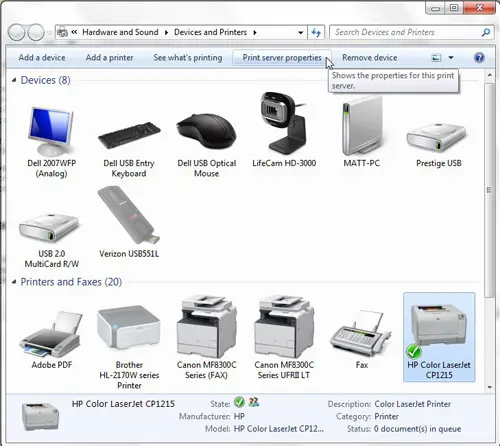
This will open a new Printer Server Properties window. Click the Drivers tab at the top of this window, click the old printer driver you want to remove, then click the Remove button at the bottom of the window.
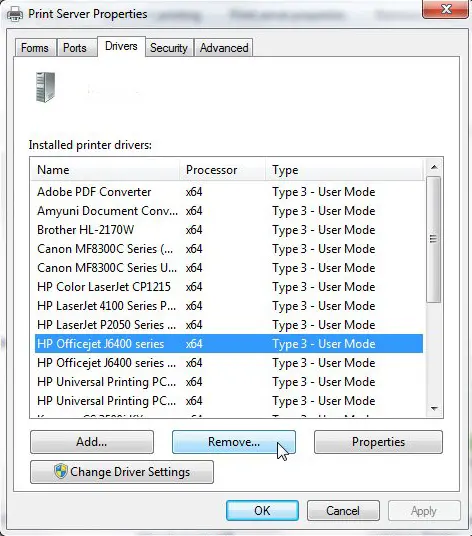
Click the option to the left of Remove driver and driver package , then click the OK button.
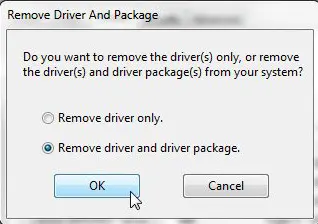
In most situations this will be the end of the process, and you will have removed all traces of the old printer driver. Unfortunately, it might not always be this easy.
Problems You May Encounter When You Want to Remove Old Printer Drivers
When I unsuccessfully attempt to remove an old printer driver, i usually get an error of the type “XX Printer could not be removed because driver XX is in use.” Unfortunately it is difficult to pinpoint exactly why you are receiving this message, but there are usually a few culprits that can be to blame.
1. Have you gone through the process of removing the device from the Devices and Printers menu?
While this step does not remove the driver from your computer, you cannot actually remove the driver until you have done this. To perform this step, open the Devices and Printers menu, right-click the printer whose driver you want to uninstall, then click the Remove Device option.
2. Is an open program still attempting to communicate with the printer?
This is a less common problem, but is one that I have encountered specifically with label printers for shipping programs. It is particularly prevalent in cases where the printer stopped working, and a print job was stuck in the print queue. The exact method for clearing this issue will vary depending upon your own specific circumstances, but a good way to resolve it is to close every program on your computer from which you can print, then press the Feed button on the printer a couple times.
3. Is there a print job stuck in the print queue?
When you right-click on a printer in the Devices and Printers menu, there is a See what’s printing option. When you click that option, it will show you the current print queue, as well as any documents that you cancelled, that you paused, or that were otherwise not successfully printer. If you cannot use the Cancel document or Cancel all documents option to clear this from the print queue, then you might need to restart your computer, remove the device from the Devices and Printers menu, then attempt to remove the driver using the procedure outlined above.
An issue that many people frequently experience is a broken printer.
Fortunately, this can usually be fixed with a few short troubleshooting steps, which we will go through below.
How to Fix a Faulty Windows Printer
For a variety of reasons, a printer may look offline in Windows 7. In addition to print driver difficulties, they can also involve problems with electricity and network access.
For further troubleshooting options, see our networked printer offline Windows 7 post.
If your printer is now showing as offline, you could try the following steps.
- Click Start .
- Choose Devices and Printers .
- Using the right-click menu on the printer icon, choose See what’s printing .
- Click the Printer tab, followed by Use printer offline , to bring the printer online.
You can also try rebooting the printer and computer, removing all of the printer’s cords, and, if necessary, reinstalling the printer if that doesn’t work.
Windows 11 Information
Printers! They’re like that one friend who needs a little extra attention. When they’re happy, everything is smooth sailing. But when they’re not, boy do they let you know! If you’ve recently upgraded or switched printers, those old drivers still hanging around on your Windows 11 system might just be the culprits causing the fuss. Time for a bit of digital spring cleaning! Let’s walk through the steps to remove those old printer drivers.
Understanding Printer Drivers
Ever wonder why we even need printer drivers? Think of them as the interpreters. Your computer speaks one language, and your printer speaks another. The driver is like the mutual friend that translates for both, ensuring your documents look exactly as they should when printed.
Getting Started: Accessing the Printer Server Properties
Before diving in, ensure you’re logged in with an administrator account. Trust me, it’ll save you a headache later!
- Press the Windows key + R on your keyboard. This opens the ‘Run’ dialogue box.
- Type in “control printers” and hit Enter. This should bring up the ‘Devices and Printers’ window.
- In the toolbar, you’ll spot an option that says “Print server properties”. Click on it.
Diving Deeper: Removing the Old Printer Drivers
- Now, in the ‘Print server properties’ window, switch to the ‘Drivers’ tab. This is where the magic happens!
- You’ll see a list of all the installed printer drivers. If your list is anything like mine, it’s longer than expected.
- Locate the old or unwanted printer driver.
- Select it, and click on the “Remove” button.
- A pop-up window will ask which driver to remove. Choose “Remove driver and driver package”.
- Confirm the action.
Voila! The old printer driver should now be history. But don’t rush off just yet, I’ve got some bonus tips for you!
Additional Information
- Backup First : As with any significant system changes, consider backing up your system before removing any drivers. It’s like wearing a helmet – better safe than sorry.
- Restart after Removal : After removing the driver, a quick system restart can help clear out any lingering files.
- Windows Update : Sometimes, if you remove a printer driver, Windows might try to reinstall it during an update. To prevent this, hide the specific update related to the printer driver.
- Manual Cleanup : Some drivers can be stubborn. If you still find traces, consider diving into the ‘Program Files’ or ‘Program Files (x86)’ directories and deleting related folders. But tread carefully; you don’t want to delete something important.
- Why should I remove old printer drivers? Old printer drivers can sometimes conflict with new ones or simply take up unnecessary space.
- Can I remove a driver if I’m not an admin? Usually, no. Admin rights are typically required for such tasks.
- What if I accidentally remove the wrong driver? Don’t panic! You can always reinstall the driver either from the printer’s official website or by reconnecting your printer.
- Does removing the driver uninstall the printer software too? Not always. Some printers come with additional software. You might need to uninstall that separately.
- Do I need to physically disconnect the printer? No, but it might be a good idea to ensure it’s turned off to avoid any mid-process surprises.
Matthew Burleigh has been writing tech tutorials since 2008. His writing has appeared on dozens of different websites and been read over 50 million times.
After receiving his Bachelor’s and Master’s degrees in Computer Science he spent several years working in IT management for small businesses. However, he now works full time writing content online and creating websites.
His main writing topics include iPhones, Microsoft Office, Google Apps, Android, and Photoshop, but he has also written about many other tech topics as well.
Read his full bio here.
Featured guides and deals
Having trouble with your printer showing offline in Windows 11? Don’t worry, you’re not alone. It’s a common issue that can usually be fixed with a few simple steps. First, check your printer and computer connection. Then, make sure your printer is set as the default one and that the ‘Use Printer Offline’ option is not selected. After that, try updating or reinstalling your printer’s driver. If those steps don’t work, troubleshoot your printer through Windows. Now, let’s dive into the details.
Step by Step Tutorial to Fix Printer Offline in Windows 11
Before we start, the steps below will guide you through the process of getting your printer back online. This will involve checking connections, settings, and drivers to ensure everything is in working order.
Step 1: Check Printer and Computer Connection
Make sure your printer is properly connected to your computer. This might seem obvious, but it’s often overlooked.
Printers can be connected to computers in several ways, including USB cables, Wi-Fi, or a wired network. If you’re using a USB cable, make sure it’s securely plugged into both the printer and your computer. If you’re using a wireless printer, check that it’s connected to the same Wi-Fi network as your computer. For network printers, make sure your computer is connected to the network and can see the printer.
Step 2: Set Printer as Default
Ensure your printer is set as the default printer on your computer. This tells your computer to prioritize this printer when sending print jobs.
To set your printer as the default, go to Settings > Devices > Printers & Scanners. Find your printer in the list, click on it, and select ‘Set as default’. If you have multiple printers and the wrong one is set as default, your print jobs might be sent to the wrong printer, which can cause confusion.
Step 3: Uncheck ‘Use Printer Offline’ Option
Make sure the ‘Use Printer Offline’ option is not selected. This option tells your computer to send print jobs to the printer queue without actually printing them.
To uncheck this option, go to Settings > Devices > Printers & Scanners, click on your printer, and select ‘Open queue’. In the printer queue window, click on ‘Printer’ and make sure ‘Use Printer Offline’ is not checked. If it is, click to uncheck it.
Step 4: Update or Reinstall Printer Driver
Outdated or corrupted printer drivers can cause your printer to appear offline. Try updating or reinstalling the driver.
To update your printer driver, go to Device Manager, find your printer, right-click on it, and select ‘Update driver’. Windows will search for the latest driver and install it. If an update doesn’t fix the problem, you can try uninstalling and then reinstalling the printer driver.
Step 5: Troubleshoot Printer Through Windows
If all else fails, use the Windows built-in troubleshooter to diagnose and fix printer problems.
To access the troubleshooter, go to Settings > Update & Security > Troubleshoot > Additional troubleshooters. Select ‘Printer’ and click ‘Run the troubleshooter’. Follow the on-screen instructions to fix any detected problems.
After completing these steps, your printer should no longer show as offline, and you should be able to print documents without any issues.
Tips to Prevent Printer Offline Issues in Windows 11
- Always ensure your printer is properly connected and turned on before printing.
- Regularly check for updates for your printer driver and install them.
- If you’re using a wireless printer, make sure your Wi-Fi connection is stable.
- Restart your printer and computer occasionally to refresh their connections.
- Consider setting up a static IP address for network printers to prevent connection issues.
Why does my printer keep going offline?
Your printer might be going offline due to connectivity issues, incorrect settings, or outdated drivers.
Can I fix the printer offline issue without tech support?
Yes, most printer offline issues can be resolved with simple troubleshooting steps that you can do on your own.
What should I do if my printer is still offline after following these steps?
If the issue persists, consider contacting the printer manufacturer’s customer support for further assistance.
Why is it important to set my printer as the default printer?
Setting your printer as the default printer ensures that print jobs are sent to the correct printer without confusion.
Is it necessary to update printer drivers?
Yes, keeping your printer drivers updated helps prevent compatibility issues and ensures your printer functions correctly.
Summary
- Check Printer and Computer Connection
- Set Printer as Default
- Uncheck ‘Use Printer Offline’ Option
- Update or Reinstall Printer Driver
- Troubleshoot Printer Through Windows
Conclusion
Dealing with a printer that’s constantly going offline can be a real headache, especially when you’re on a tight deadline or in the middle of an important project. But with the steps outlined above, you should be able to bring your printer back online in Windows 11 without breaking a sweat. Remember that staying on top of maintenance, like updating drivers and checking connections, can prevent many of these issues from occurring in the first place.
If you’ve tried all the tips and your printer is still showing offline, don’t hesitate to reach out to professional tech support. They can provide expert advice and help you resolve any underlying issues that may be causing the problem. And hey, while you’ve got some time waiting for those documents to print, why not explore other ways to optimize your Windows 11 experience? There’s a whole world of shortcuts, features, and tricks to discover. Happy printing, and may your printer never go offline again!
Matthew Burleigh has been writing tech tutorials since 2008. His writing has appeared on dozens of different websites and been read over 50 million times.
After receiving his Bachelor’s and Master’s degrees in Computer Science he spent several years working in IT management for small businesses. However, he now works full time writing content online and creating websites.
His main writing topics include iPhones, Microsoft Office, Google Apps, Android, and Photoshop, but he has also written about many other tech topics as well.
Read his full bio here.
Featured guides and deals
Connecting your iPad to a wireless printer is a breeze! First, ensure your printer is Wi-Fi enabled and connected to the same network as your iPad. Next, open the document or image you’d like to print on your iPad, tap the share icon, and select ‘Print.’ Choose your printer from the list, adjust your print settings, and hit ‘Print’ again.
Once you’ve completed these steps, your iPad will send the print job to your wireless printer, and you’ll have your document or image in no time!
Introduction
In today’s fast-paced world, efficiency is key. Whether you’re a busy professional, a student juggling multiple assignments, or just someone who loves the convenience of modern technology, knowing how to connect your devices seamlessly is a must. This is especially true when it comes to printing documents and images from your iPad. After all, who has the time to transfer files to a computer just to print them?
Connecting an iPad to a wireless printer is not only a time-saver but also adds a layer of convenience to your workflow. This capability is crucial for those who rely on their iPads for work, education, or personal use. Imagine being able to print your boarding pass right from your couch, or sending your homework to the printer without having to boot up your PC. That’s the kind of simplicity and effectiveness we’re talking about!
Moreover, with the rise of the paperless trend, many might not see the relevance of printing. However, there are still plenty of situations where a hard copy is necessary, be it for legal documents, art projects, or just personal preference. This is where the ability to connect your iPad to a printer becomes invaluable.
Step by Step Tutorial to Connect My iPad to a Wireless Printer
Before we dive into the steps, it’s important to understand what we’re achieving here. By following these steps, you’ll be able to send print jobs directly from your iPad to your wireless printer, without the need for cables or transferring files to another device. Let’s get started!
Step 1: Check Printer Compatibility
Ensure that your printer supports AirPrint, Apple’s wireless printing technology.
Many modern printers come with AirPrint compatibility, which makes them perfect for printing from iOS devices. If your printer supports AirPrint, you’re already halfway there!
Step 2: Connect Your Printer to Wi-Fi
Make sure your printer is connected to the same Wi-Fi network as your iPad.
This step is crucial since the wireless printing process relies on both your iPad and printer being on the same network. Check your printer’s manual for specific instructions on connecting it to Wi-Fi.
Step 3: Open the Document or Image
On your iPad, open the document, photo, or webpage you want to print.
Whether it’s a PDF, a photo album, or an email, most content on your iPad can be printed as long as it offers a share or print option.
Step 4: Access the Share Icon
Tap on the share icon, which is typically represented by a square with an upward arrow.
The share icon is your gateway to connecting with other devices and services, including your wireless printer.
Step 5: Select ‘Print’
In the sharing options, scroll down if necessary and select ‘Print.’
This will bring up the print options where you’ll select your printer and set your preferences.
Step 6: Choose Your Printer
Choose your printer from the list of available printers.
If your printer isn’t showing up, double-check that it’s connected to the same Wi-Fi network as your iPad.
Step 7: Adjust Print Settings
Adjust settings such as the number of copies, pages to print, and color options if necessary.
This step allows you to customize the print job to your needs, whether you’re printing a single image or a multi-page document.
Step 8: Print!
Once you’re happy with your settings, tap ‘Print’ to send the job to your wireless printer.
And just like that, your print job is on its way, all without wires or complicated setups!
Pros
| Benefit | Explanation |
|---|---|
| Convenience | There’s no denying the convenience of wireless printing. No more fumbling with cables or transferring files between devices. Just a few taps on your iPad and you’re good to go. |
| Time-Saving | By connecting your iPad to a wireless printer, you’re saving valuable time. Instead of going through a multi-step process to print from a desktop, you can do it directly from your iPad, even while multitasking. |
| Mobility | With a wireless printer, you’re not tied to a desk. You can move around freely with your iPad, print from different rooms, or even from outside your home, as long as you’re connected to the same network. |
Cons
| Drawback | Explanation |
|---|---|
| Dependence on Wi-Fi | Wireless printing relies heavily on a stable Wi-Fi connection. If your network is down or spotty, it could disrupt your printing process. |
| Printer Compatibility | Not all printers support AirPrint or wireless printing. This means you might need to invest in a new printer if your current one isn’t compatible. |
| Limited Features | Some printing features available on desktop software may not be available when printing from an iPad. This could be a limitation for those needing advanced printing options. |
Additional Information
While connecting your iPad to a wireless printer is straightforward, there are a few additional tips to keep in mind. First, make sure your iPad’s operating system is up to date, as this can affect compatibility with your printer. Additionally, if you encounter any issues with AirPrint, try restarting both your iPad and printer, as this can resolve many connectivity problems.
Another handy tip is to use printer-specific apps if available. Many printer manufacturers offer their own apps for iOS, which can provide more features and a smoother printing experience. These apps can be particularly useful if you’re trying to print something beyond basic documents and images.
Finally, remember to consider your printing needs when choosing a printer. If you’re someone who prints frequently or in large volumes, look for a printer with high-speed printing capabilities and economical ink usage. On the other hand, if you print infrequently, a more basic model may be sufficient.
Summary
- Check Printer Compatibility
- Connect Your Printer to Wi-Fi
- Open the Document or Image
- Access the Share Icon
- Select ‘Print’
- Choose Your Printer
- Adjust Print Settings
- Print!
What if my printer isn’t AirPrint compatible?
If your printer isn’t AirPrint compatible, you might still be able to print from your iPad using the manufacturer’s app or third-party printing apps available on the App Store.
Can I print from any app on my iPad?
Most apps that support sharing or exporting content will allow you to print, but it ultimately depends on the app. Look for the share icon or a print option within the app.
Do I need to install any drivers on my iPad?
No, one of the benefits of AirPrint is that it doesn’t require drivers. As long as your printer is AirPrint compatible, it should work seamlessly with your iPad.
Can I print double-sided from my iPad?
Yes, if your printer supports duplex printing and it’s an option within the app you’re printing from, you can print double-sided from your iPad.
How can I troubleshoot if my iPad can’t find my wireless printer?
Make sure both devices are on the same Wi-Fi network. Restart both your iPad and printer. If the issue persists, check for updates for your iPad’s operating system and your printer’s firmware.
Conclusion
Connecting your iPad to a wireless printer is a game-changer in terms of convenience and efficiency. Whether you’re printing out a last-minute report, a cherished photo, or an important document, the ability to do so directly from your iPad makes life just that little bit easier.
Remember to check your printer’s compatibility with AirPrint, ensure both devices are on the same Wi-Fi network, and follow the simple steps outlined in this article. With this knowledge, you’ll be able to enjoy the benefits of wireless printing without any hassles. Happy printing!
Matthew Burleigh has been writing tech tutorials since 2008. His writing has appeared on dozens of different websites and been read over 50 million times.
After receiving his Bachelor’s and Master’s degrees in Computer Science he spent several years working in IT management for small businesses. However, he now works full time writing content online and creating websites.
His main writing topics include iPhones, Microsoft Office, Google Apps, Android, and Photoshop, but he has also written about many other tech topics as well.
Read his full bio here.
Adding a printer to an iPhone is a relatively simple process. First, ensure that your printer is AirPrint-enabled and connected to the same Wi-Fi network as your iPhone. Then, open the app you want to print from, find the print option, select your printer, and tap print. That’s it! Now you’re all set to print right from your iPhone.
After completing this action, you’ll be able to print documents, photos, emails, and more directly from your iPhone to your AirPrint-enabled printer without any additional software or cables.
Introduction
In today’s fast-paced world, we’re always looking for ways to streamline our workflow and increase productivity. One way to do this is by utilizing the powerful capabilities of our smartphones — like printing directly from an iPhone. This feature can be a lifesaver for professionals on the go, students, or anyone without immediate access to a computer.
The convenience of printing from an iPhone can’t be overstated. Whether you’re in a coffee shop, at a friend’s house, or in a hotel room, as long as there’s a compatible printer nearby, you can print important documents in a snap. Not only does this save time, but it also reduces the hassle of transferring files between devices or searching for a print shop. This capability is becoming increasingly relevant as we continue to rely on our smartphones for more of our daily tasks.
Step by Step Tutorial to Adding a Printer to an iPhone
This section will guide you through the steps necessary to connect your iPhone to a printer, enabling you to print documents directly from your device.
Step 1: Verify Printer Compatibility
Check if your printer supports AirPrint.
AirPrint is Apple’s wireless printing technology, which allows iOS devices to print wirelessly without the need for printer-specific drivers. Before attempting to add a printer to your iPhone, ensure that your printer is AirPrint-compatible. Most modern printers come with AirPrint support, but you can also check for compatibility on the manufacturer’s website or look for the AirPrint logo on the printer.
Step 2: Connect to the Same Wi-Fi Network
Make sure your iPhone and printer are connected to the same Wi-Fi network.
For AirPrint to work, both your iPhone and the printer must be connected to the same Wi-Fi network. This is because AirPrint uses the network to communicate between the device and the printer. If your printer is connected to a different network, you’ll need to switch networks on your iPhone or reconfigure your printer’s network settings.
Step 3: Select the Print Option in Your App
Open the app you want to print from and tap the share icon or print option.
Most iOS apps that support printing will have a share icon (which looks like a square with an upward-pointing arrow) or a direct print option. Tapping on this will bring up the option to print the document, image, or email you’re viewing. This includes apps like Photos, Safari, Mail, and more.
Step 4: Choose Your Printer
Select your AirPrint-compatible printer from the list.
Once you tap the print option, you’ll be presented with a list of available printers. Select the printer you verified as AirPrint-compatible in step 1. If you don’t see your printer listed, ensure that it’s turned on and connected to the same Wi-Fi network as your iPhone.
Step 5: Tap Print
Finalize your print settings and tap ‘Print.’
Before hitting ‘Print,’ you can adjust settings like the number of copies, color options, and which pages to print. Once you’re satisfied with the settings, tap ‘Print,’ and your document or image will be sent to the printer.
Pros
| Benefit | Explanation |
|---|---|
| Convenience | Printing from an iPhone is incredibly convenient as it allows you to print documents from virtually anywhere, without the need for a computer. |
| Time-Saving | This feature saves valuable time by eliminating the need to transfer files to a computer just to print them. |
| Ease of Use | The process of adding a printer to an iPhone is straightforward and user-friendly, making it accessible to users of all ages and tech-savviness. |
Cons
| Drawback | Explanation |
|---|---|
| Printer Compatibility | Not all printers are AirPrint-enabled, which can be a significant limitation for users with older or less advanced printers. |
| Network Dependency | Both the iPhone and the printer must be connected to the same Wi-Fi network, which can be a problem if you’re in a location with multiple networks or restricted access. |
| Limited Settings | While AirPrint is convenient, it often offers fewer settings and customizations compared to printing from a computer. |
Additional Information
When adding a printer to your iPhone, there are a few additional tips that may come in handy. For instance, if you find yourself needing to print but don’t have an AirPrint-compatible printer nearby, there are third-party apps available on the App Store that can bridge the gap by enabling printing via other means. Some printer manufacturers also offer their own apps for more advanced printing features and printer management.
Also, keep in mind that while AirPrint is designed to work seamlessly, occasionally you might run into issues. Common troubleshooting steps include ensuring both devices are updated to the latest software, restarting both the iPhone and the printer, and double-checking network settings. If you still can’t get it to work, consult the printer’s manual or contact the manufacturer’s support for help.
Summary
- Verify that your printer is AirPrint-enabled.
- Connect your iPhone and printer to the same Wi-Fi network.
- Open the app and select the print option.
- Choose your printer from the list.
- Adjust settings and tap ‘Print.’
Can I print from my iPhone to a non-AirPrint printer?
While AirPrint is the easiest way to print from an iPhone, there are third-party apps available that can enable printing to non-AirPrint printers.
Do I need to install any printer drivers on my iPhone?
No, one of the benefits of AirPrint is that it does not require the installation of any printer drivers on your iPhone.
How can I check if my printer is AirPrint-compatible?
You can check the printer’s manual, the manufacturer’s website, or look for the AirPrint logo on the printer itself.
What if my printer doesn’t show up in the list of available printers?
Make sure that the printer is turned on, connected to the same Wi-Fi network as your iPhone, and that it’s AirPrint-compatible.
Can I print from any app on my iPhone?
Most apps that support sharing or have content that can be printed will have the AirPrint option. This includes but is not limited to Photos, Mail, Safari, and supported third-party apps.
Conclusion
Adding a printer to your iPhone can significantly enhance your productivity and flexibility in handling documents. Whether you’re a student, professional, or just someone who enjoys the convenience of technology, the ability to print directly from your iPhone is a feature that should not be overlooked.
Remember that while AirPrint is a powerful tool, it’s important to ensure that your printer is compatible and that both devices are on the same network to avoid any hiccups. With this guide in hand, you’re now equipped to tackle printing tasks from your iPhone with confidence.
Matthew Burleigh has been writing tech tutorials since 2008. His writing has appeared on dozens of different websites and been read over 50 million times.
After receiving his Bachelor’s and Master’s degrees in Computer Science he spent several years working in IT management for small businesses. However, he now works full time writing content online and creating websites.
His main writing topics include iPhones, Microsoft Office, Google Apps, Android, and Photoshop, but he has also written about many other tech topics as well.
Read his full bio here.

